
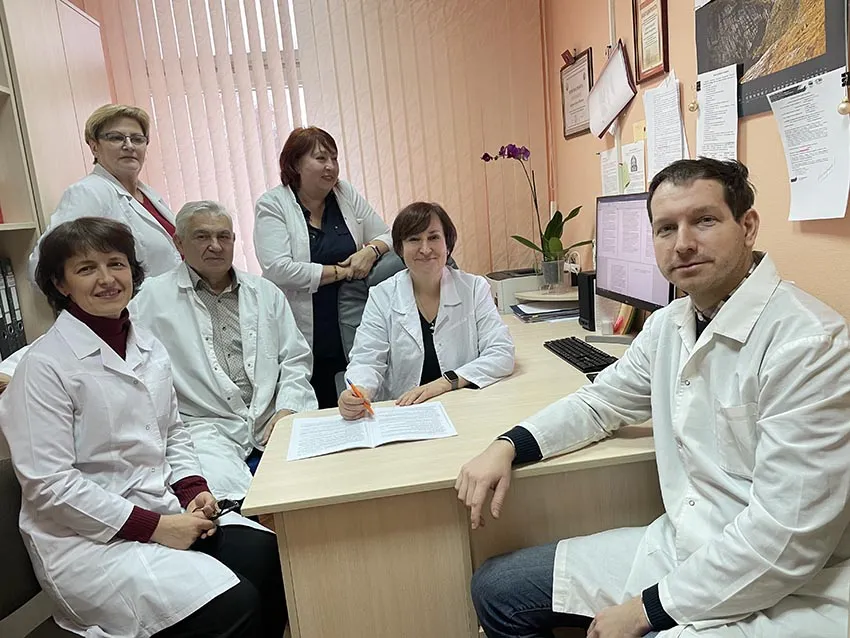
Laboratory of Nosocomial Infections (LNI) It was founded in 1987. The main areas of scientific activity of the laboratory include microbiological monitoring of the etiological structure and sensitivity-resistance of nosocomial infectious agents to antimicrobial agents; study of the mechanisms of formation of resistance of microorganisms; development of methods for determining the resistance of bacteria and fungi to antibiotics, antiseptics and disinfectants; scientific justification of anti-epidemic measures; preparation of recommendations on the use of scientific research results in the healthcare system of the Republic of Belarus, as well as participation in the implementation of these results in practical activities. The commercial activity of the laboratory is focused on providing paid services within the existing scope of accreditation. A promising commercial activity of the laboratory is the diagnosis of infectious diseases using methods of classical bacteriology and using molecular genetic methods (PCR diagnostics).
The laboratory also provides assistance in carrying out dissertation research for doctoral students, graduate students (adjuncts) and undergraduates, as well as diploma and course projects (works) for full-time and part-time students within the framework of specialization.
LABORATORY ACCREDITATION AREA
The laboratory is accredited for compliance with the requirements of the GOST ISO/IEC 17025-2019 standard "General requirements for the competence of testing and calibration laboratories", certificate of accreditation BY/112.1.0427 dated 04/12/2004.
National area of accreditation: assessment of antimicrobial activity of disinfectants and antiseptics; assessment of antimicrobial protection of cosmetic products.
EAEU accreditation area: TR CU 009/2011 On the safety of Perfumery and cosmetics: Perfumery and cosmetics; Antimicrobial protection (activity). (GOST ISO 11930-2014).
GROUP

Head of the laboratory
Zhanna Fyodorovna Tsirkunova
PhD. Biol. sciences, Associate Professor

Leading Researcher
Gennady Skorokhod
Candidate of Medical Sciences, Associate Professor

Research Associate
Butkevich Vasily Vladimirovich

Research Associate
Berdnik Natalia Nikolaevna
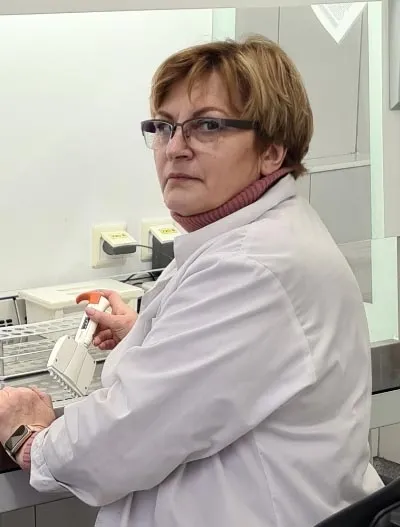
Laboratory assistant of the 1st category
Olga Ivanovna Porutchik

Junior Researcher
Vinogradov Alexander Alexandrovich

Laboratory assistant
Dobysh Taisa Nikolaevna

Laboratory assistant
Natalia Shulyakovskaya
SCIENTIFIC ACTIVITY AND ACHIEVEMENTS
During the period 2015-2025, the laboratory achieved the following results:
- a method for assessing and criteria for the resistance of fungi to antimicrobial agents was developed in order to make an informed choice of means of treatment and prevention of mycosis; -a method for assessing the sensitivity and resistance of opportunistic bacteria to antiseptics of therapeutic use has been developed;
- a method of intraspecific typing of fungi of the genus Candida has been developed for epidemiological surveillance of nosocomial candidiasis;
- a method of genetic typing of multiple drug-resistant Staphylococcus spp. has been developed, and their genetic variants circulating in medical institutions have been studied;
- the effect of sublethal concentrations of biocides (antiseptics and desinfectants) on the formation of multiple resistance of microorganisms that cause opportunistic infections to antimicrobial agents has been studied;
- a method for accelerated determination of the effectiveness of disinfectants against mycobacteria has been developed;
- a scientific and educational complex has been developed and manufactured for research on mechanisms and modes of accelerated isolation and identification of infectious agents using bioprocess chip formats;
- the methodological support for the accelerated detection and identification of bacteria by biosensor chip formats under conditions of heterogeneity of the dispersed phase and the dispersed medium has been investigated and developed.;
Currently, research is caried in the following areas:
- studying the interaction of antimicrobial agents and humoral factors of innate immunity;
- investigation of the sensitivity to biocides of biofilm forms of microorganisms that cause opportunistic infections;
- development of an algorithm for calculating effective working concentrations of antiseptics and disinfectants in relation to microorganisms in various forms of existence in the external environment;
- study of the etiological structure and drug resistance of secondary bacterial infection pathogens in COVID-19 in modern conditions.
The research results have been presented at more than 20 scientific conferences, congresses, conventions and sessions at the international and national levels.
6 application instructions have been developed, approved and implemented.
On the basis of the laboratory, more than 20 scientific research works of students and more than 10 dissertation studies have been carried out for the degree of candidate and Doctor of Sciences.
PUBLICATIONS
During the period 2015-2025, the laboratory staff published more than 70 articles and scientific papers, the main of which are:
1. Zirkunova Zh.F., Skorokhod G.A., Gudkova E.I., Gavrilova I.A., Butkevich V.V., Berdnik N.N. Sensitivity to disinfectants of fungi of the genus Candida isolated from patients in hospitals of various profiles in Minsk // Disinfection business, 2018, No. 3, pp. 35-41.
2. Skorokhod G.A., Gudkova E.I., Zirkunova Zh.F., Slug V.V., Kanashkova T.A., Korolevich M.P., Chisty A.G. Sensitivity of clinical staphylococcal isolates to antiseptic drugs // Medical Journal, 2019, No. 4, pp.104-109
3. Skorokhod G. A., Gudkova E. I., Zirkunova Zh.F., Butkevich V. V., Kanashkova T. A., Adamovich T. G., Gavrilova I. A., Korolevich M. P. Sensitivity of clinical isolates of nosocomial pathogens to antiseptic drugs // Medical Journal, 2020, No. 4, pp.119-123.
4. Zirkunova Zh.F., Skorokhod G.A., Gudkova E.I. Typing Candida spp. a method based on the assessment of the profile of phenotypic sensitivity/resistance to antiseptics // American Science Journal. – 2020. – Vol. 43, No. 1. – P.33-39.
5. Zirkunova Zh.F., Yemelyanova A.A., Gudkova E.I., Skorokhod G.A., Gavrilova I.A., Butkevich V.V., Dolgina Yu.N., Vashkevich M.P., Shepelevich N.A. Analysis of the resistance of Escherichia coli clinical isolates to antimicrobial agents in a single-center study // Immunopathology, allergology, infectology. - 2022. – No. 1. – pp. 32-40.
6. Zirkunova Zh.F., Yemelyanova A.A., Gudkova E.I., Skorokhod G.A., Butkevich V.V., Slabko I.N., Berdnik N.N., Gavrilova I.A. The effect of sub-inhibitory concentrations of biocides on the formation of adaptive resistance of clinical Klebsiella pneumoniae isolates // Immunopathology, allergology, infectology. - 2022. – No. 3. – pp. 31-40.
7. Butkevich V.V., Zhavoronok S.V., Gudkova E.I. and others. Resistance of clinical Klebsiella pneumoniae isolates to carbapenems isolated from patients with secondary bacterial infection in COVID-19 for the period 2019-2021 // Clinical Infectology and Parasitology. – 2022. – Vol. 11, No. 4 https://doi.org/10.34883/PI.2022.11.4.029
8. Zirkunova Zh.F., Yemelyanova A.A., Gudkova E.I., Skorokhod G.A. The effect of povidone-iodine on the sensitivity of clinical isolates of Klebsiella pneumoniae to antibiotics // Journal of Microbiology, Epidemiology and Immunobiology. – 2023. – – № 100 (2). – Pp. 209-218.
9. Vyatkina O.I., Potapnev M.P., Circunova Zh.F. Improving the effectiveness of early detection of microorganisms contaminating donated blood using yeast extract // Immunopathology, allergology, and infection. - 2023. – No. 1. – pp. 70-76.
10. Zirkunova Zh.F., Malkovets O.G., Kazakova Yu.M., Bogomolova A.A. Study of antimicrobial activity of carbon-containing toothpastes // Modern dentistry. – 2023. – № 1 (90). – Pp. 47-50.
11. Skorokhod G.A., Circunova J.F., Gudkova E.I., Slabko I.N. M.fortuitum ATCC 6841 as a test culture for screening studies in evaluating the effectiveness of disinfectants against mycobacteria // Disinfection business (RF). – 2023. – №4. – Pp.18-21.
12. Butkevich V.V., Zhavoronok S.V., Gudkova E.I. and others. Dynamics of antibiotic resistance of clinical isolates of Klebsiella pneumoniae isolated from patients with secondary bacterial infection in COVID-19 over the period 2019-2021 // Medical Journal. – 2023. – №4. – pp. 49-57.
13. Malchenkova S.S., Golyak N.S., Zirkunova Zh.F., Berdnik N.N. Antibacterial properties of aqueous solutions of sodium thiosulfate // Bulletin of VSMU, 2024, vol. 23, No. 5, pp. 56-62.
14. Butkevich V.V., Karpova E.V., Tapalsky D.V. and others. Resistance to antibiotics and their combinations of carbapenemase-producing Klebsiella pneumoniae strains isolated from patients with COVID-19 // Laboratory diagnostics. Eastern Europe. – 2024. – Vol. 13, No. 3. – Pp. 378-385.
15. Malchenkova S.S., Golyak N.S., Berdnik N.N., Zirkunova Zh.F. Stability and microbiological purity of aqueous solutions of cadmium chloride of extemporeal manufacture // Bulletin of the Smolensk State Medical Academy, 2025, vol. 24, No. 1, pp.142-150.
16. Skorokhod G. A., Gudkova E. I., Zirkunova Zh.F., Slabko I. N., Berdnik N.N. Mycobacterium fortuitum as a test culture for accelerated determination of the effectiveness of disinfectants against mycobacteria // Medical journal. – 2025. - №1. – 104-107.
EQUIPMENT
The laboratory has the necessary equipment to support scientific research and commercial activities of the laboratory:
1. Automatic microbiological Analysersvitek® 2 compact System
2. Microbiological safety boxes (laminar flow cabinets).
3. UVT-B-AR, Biosan PCR box.
4. Gentier 96E real-time PCR amplifier. Included with HP 255G827K56EA laptop.
5. TCP-26 LMX V1 Transilluminator 365/312mm UV Table.
6. Horizontal camera for A5 Thermo Scientific electrophoresis complete with EC300XL electrophoresis power supply.
7. Heat Sealer S100 sealing device for 96-well tablets, semi-automatic, Eppeddorf AG
8. Steam sterilizers.
9. Automatic photometer for microplates RT-6100.
10. Thermostats with cooling.
11. Electric dry-air thermostats.
12. Desktop laboratory centrifuges.
13. Laboratory baths.
14. Electronic laboratory scales.
15. Temperature and humidity data loggers.
16. Conductometer MARK-603.
17. PH meters.
18. DEN-1B densitometer.
19. Thermoshakers for tablet.
20. AE-15 medical electric aquadistillator.
21. LAUDA Puridest PD 2 D bidistillator.
22. Laboratory dishwasher GW4060SC.
23. Low-temperature freezers.
24. Refrigerators.
25. Mechanical pipette dispensers.
26. Split systems for air conditioning.
27. DNA extractor for clinical diagnostics.
28. Real-time amplifier.
29. Vertical steam pressure sterilizer BKM-Z45B, BIOBASE.
30. Laminar flow cabinet of the 2nd class of biological protection.
31. Centrifuge TD4-T.
32. Ultraviolet bactericidal air recirculator irradiator.
33. Mini centrifuges.