
The Department of Epidemiology was founded in 1969 in the Belarusian State Medical University. The founder of the department and the first head was Professor Nikolai I. Lebedev.
In the 70-80-ies of XX century, the main attention at the department was paid to the selection and training of the teaching staff, the educational process organization, the definition of research work directions, the development of the material and technical base. In a short time, lecture courses were developed for students of all faculties, methodological developments for practical classes were prepared, basic institutions for industrial practice were determined. At the initial stage of the department's activities, the educational process was based on the teaching epidemiology experience in the leading medical universities of the Soviet Union (the 1st Moscow Medical Institute and the Leningrad Sanitary and Hygienic Medical Institute).
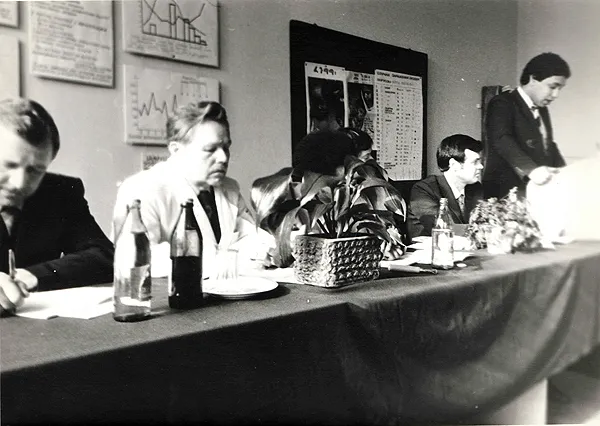
From the very beginning, the Department of Epidemiology had individual training rooms in the educational building №1, which was located on the former square named after Lenin (now the building of the Minsk metro). In 1968, the Department of Epidemiology was allocated three rooms in the educational building №3 on the Leningradskaya st. Serious difficulties with placement led to the fact that practical classes on Epidemiology were held in the classrooms of other departments (Infectious Diseases Departments on Kropotkin st., Social Hygiene and Healthcare Organization, Forensic Medicine, etc.). Undoubtedly, the absence of 'own' classrooms created many difficulties in educational and scientific work. However, the professional approach to business, the high responsibility of the academic stuff for the assigned work, their attention and care for the students largely compensated for the costs of the complex 'housing' issue.
Gradually formed and became more and more detailed lecture course on Epidemiology. Covering the latest achievements in Epidemiology, all lectures were focused on infectious pathology, specific for Belarus. In the practical training of students, the experience of prevention and control of infectious diseases, accumulated by the sanitary epidemiological service of our republic, was widely used.
The first academic stuff of the Department of Epidemiology included following teachers: Professor N.I. Lebedev, Associate Professor L.G. Sheremetyeva, assistants V.N. Gorbacheva, N.G. Minina, V.N. Stavsky, G.N. Chistenko, I. A. Rayeuskaya.
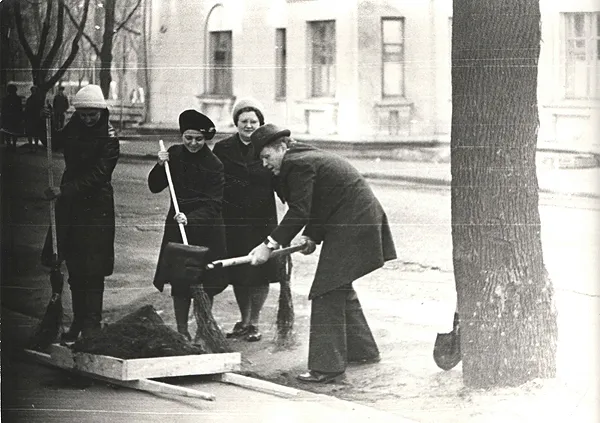
In 1980, after the commissioning of the educational buildings of the Medical Institute on Dzerzhinsky Avenue, the Department of Epidemiology was first satisfactorily located on the 4th floor of the educational building № 3 (Leningradskaya St., 8). The presence of a sufficient number of premises leaded to the systematical organization of the educational process with students, intensification of the scientific researches of teachers, creation of the favorable conditions for the student scientific activities. At this time, the links of the Department of Epidemiology with the Epidemiological Departments of the Russian Federation (Moscow, St. Petersburg, Omsk, Kemerovo) were developing.
Since 1985, the Department of Epidemiology has been headed by Professor Grigory N. Chistenko. In the second half of the 80-ies at the Department of Epidemiology, the directions of educational and scientific work, laid down in previous years, were developed. The difficult years of at that time in the Soviet Union (from the second half of the 80-ies till the beginning of the 90-ies years of XX century) left their mark on the activities of the Department of Epidemiology. During these years, the academic stuff included S.I. Antipova, N.L. Ryabtseva, M.M. Adamovich, Yu.N. Kuzmenkov, V.T. Moisyuk, A.M. Dronina, A. N. Kakhnovich, I. V. Vasilevko, A. G. Gladkiy, O. A. Brusinenko. And although later many of these teachers found themselves in other fields of activity, each of them made a certain contribution to the development of the Department of Epidemiology.
It should be noted that in the early 90-ies with the collapse of the Soviet Union, the system of postgraduate training of parasitological doctors was disrupted. To compensate for this vacuum of professional training, the Department of Epidemiology in these years conducted a number of advanced training cycles for graduates.
Since 2000, a new stage in the development of the Department of Epidemiology began. Together with other departments of the Faculty of Preventive Medicine, the Department of Epidemiology moved from the educational building on Leningradskaya st. to the educational building № 2 (Asanaliev lane, 5). Despite the not very convenient geographical position of the building, the department received a satisfactory material base at its disposal. It made possible to arrange thematic training rooms and ensure full compliance with sanitary rules and norms in the educational process organization.
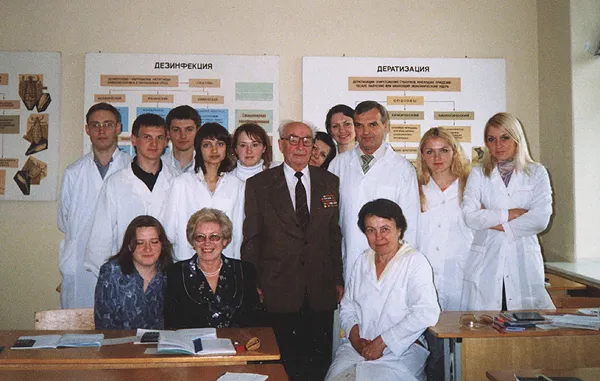
The rapid development of computer and information technologies significantly affected the organization of the educational process and scientific activities at the Department of Epidemiology. Personal computers have become indispensable for processing large amounts of epidemiological information. Multimedia versions of lectures on Epidemiology have significantly increased their scientific and methodological level.
In recent years, the Department of Epidemiology has been developing test knowledge control, using the principles of evidence-based medicine, introducing a quality management system for all types of activities, improving various types of rating assessments. The increase in the enrollment of students at the Faculty of Preventive Medicine led to the expansion of the Department of Epidemiology teaching staff.
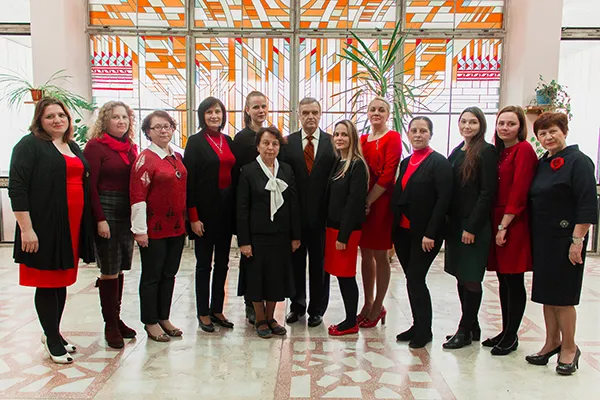
Currently, the staff of the Department of Epidemiology represents a successful combination of the teachers’ experience working at the department for many years (Professor G.N. Chistenko, Associate Professor I.N. Valchuk, Associate Professor T.S. Guzovskaya, Associate Professor M.I.Bandatskaya, Senior Lecturer I. Rayeuskaya) with the enthusiasm of a younger generation of teachers (T.S.Vasyuk, Associate Professor I.V. Fedorova, Associate Professor O.A.Gorbich, Associate Professor Tatiana E. Dorojenkova, M.A.Shylava, Yu.N.Kuzmenkov).