
Supervisor: Prykhozhaya K.S. (Senior Lecturer)
Curator for Medical Faculty for International Students (in English) Kangana Mudiyanselage Ruwanmi Nimansha Bandara (tel. +375(25)9174075 , @countrydaze in telegram )
The student scientific circle (SSC) at the Department of Pharmacology was first organized in 1954 by Professor K.S. Shadurskiy, who laid the foundations of experimental pharmacology in Belarus and became the founder of the largest scientific school of pharmacologists in the Soviet Union.
Many university teachers began their scientific careers from their participation in the department’s SSC, including professors B.V. Dubovik, M.K. Kevra, E.P. Merkulova, V.A. Pereverzev, N.A. Bizunok, associate professors A.V. Miklevich, S.K. Shadurskaya, A.V. Vauchok et al.
The department is actively working to identify gifted graduates of the university and to attract them to study in the magistracy or as a teacher-trainee. To attract the most gifted, creative, interested and hardworking students to science, the work is organized in several stages.
At the first stage, under the guidance of the professors of the department, students carry out analytical educational and research work within the framework of a problem that is not only important from the standpoint of modern science, but also interesting for the student. At the same time, the basics of information retrieval are comprehended, the ability to select, critically analyze and generalize scientific information is formed. Based on the results of the work done, reports of an overview and analytical nature are prepared and presented as the reports at meetings of the SSC, student scientific conferences.
At the next stage, the most active circle members are invited to develop a scientific project on the problem chosen by the researcher himself. According to the results of the competition of student research projects, the most interesting and promising developments are selected, on the basis of which experimental research is planned.
Further work of the circle students is carried out according to an individual program, which provides for the implementation of an experimental study on the selected topic simultaneously with the study of the foundations of scientific ethics and the principles of research work in the field of experimental medicine. Students master the methods of analysis and statistical processing of the results of a scientific experiment, acquire the ability to summarize and present the data obtained in the form of a report and scientific publication.
The results of student research work are heard at the annual International Scientific Conference of Young Scientists and Students of the Belarusian State Medical University. The best works participate in the Republican competition of student research papers.
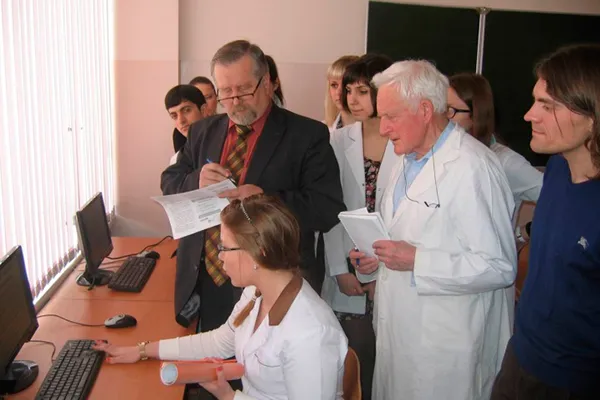
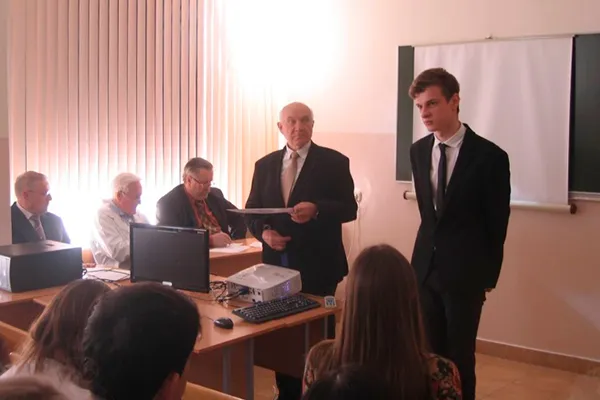
Basic Plan of the SSC round table work
- Rules for working with scientific literature, information and patent search, rules for writing of a problem-oriented literature review
- Rules for working in a scientific research laboratory
- Planning and implementation of a pilot study in the field of pharmacology
- Statistical processing of the results of biomedical research
- Ethical aspects of the use of laboratory animals in pharmacological and toxicological research
- Rules for the preparation of a scientific report and presentation based on our own scientific data
- Ethical and legal aspects of research with human participation (volunteers) in clinical trials of drugs

Since 2020 the curator of the SSC activity is assistant Yu.V. Kashkur
Currently, the main direction of the SSC's work is computer-aided drug design (CADD). The sessions are focused on obtaining practical skills; within the framework of the circle, students carry out a project that includes the main stages of in-silico drug development.
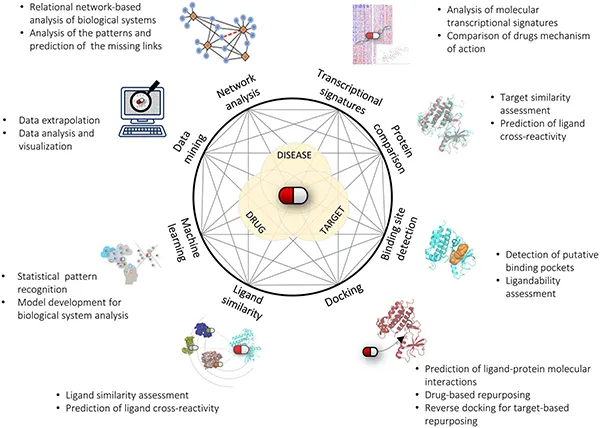
Current Plan of the student’s scientific circle work during academic year.
- The main directions of scientific work at the department, the basics of computer-aided drug design.
- Basics of programming in Python, working with databases of chemical
- compounds, working with the Pandas library.
- The activity of chemical compounds, molecular descriptors and
- fingerprints, working with RDkit library
- Introduction to Data Science, Similarity of Chemical Compounds, Tanimoto Index, clustering algorithms (Butina).
- Alignment of the molecules, molecule structure optimization, identification of pharmacophore features, building a pharmacophore model.
- Screening of chemical compounds, checking molecules according to druglikeness criteria, prediction of ADME properties.
- Molecular docking of lead candidates
- Fundamentals of Deep learning, the use of neural networks and artificial intelligence in new medicinal compounds search.
Lessons are held in a computer class, so students have the opportunity to work both on the department computers and on their own. Computer modelling and drug design is an interdisciplinary science, thus students become familiar with the main directions and techniques of in-silico drug development and programming.
CADD skills, that could be obtained by SSC attendance:
- Working with databases of chemical compounds
- Representation and clustering of molecules
- Pharmacophore modelling
- Molecular docking
- ADME & Hit to lead optimization
Students have the opportunity to gain basic programming knowledge:
- Fundamentals of Python Programming
- Git and API Basics
- Fundamentals of Data Science and Deep Learning.
Within the framework of the 74th International Scientific and Practical Conference of Students and Young Scientists “Actual problems of modern medicine and pharmacy - 2020” 18 student scientific works were presented by 31 student and young scientist.
The results of the conference are following:
First degree diploma winners:
1. Эффективность антиаритмических средств при фибрилляции предсердий на этапе оказания скорой медицинской помощи. (Захаренко Н. А./ Янчарская А. И.)
2. Эффективность применения барицитиниба у пациентов с ревматоидным артритом. (Шведова М.Ф./ Михновец М.С.)
Second degree diploma winners:
3. Возможности медицинского применения каннабиноидов в терапии соматических и психических заболеваний. (Скугаревский А. О.)
4. Компьютерные методы фармакофорного анализа на примере антиаритмических препаратов I класса. (Сипович Ю. О.)
5. Влияние моноклональных антител трастузумаб на химиотерапию рака молочной железы. (Котович А.В./Поздняков Д.С.)
Third degree diploma winners:
6. Прогностическое значение уровней витамина D3 и антимюллерового гормона на состояние овариального резерва. (Чайковская А.М./Севрукевич В.В.)
7. Сравнения различных схем медикаментозного лечения микобактериоза лёгких. (Бородин Д.И.)
8. Эффективность комплексной фармакотерапии ВИЧ-инфекции у детей. (Лукашов М.М./Глазунов Д.И.)
Presentations and additional information could be found on theweb page.