
Our educational work has a simple mission: our goal is to educate, develop and prepare medical students, interns and residents to be outstanding clinicians.
We have the multilevel system of higher education: students of the IV, V and VI courses of the Faculty of Medicine, the Faculty of Medicine of foreign students and the Faculty of Pediatrics, the III course of the preventive medicine and the IV course of the Faculty of Dentistry , PhD graduates, and residency trainees are trained.
The clinical base of the Department of Obstetrics and Gynecology comprises obstetric and gynecological departments and units at the following medical and preventive institutions: 1st City Clinical Hospital , 5th City Clinical Hospital, 6th City Clinical Hospital, 2nd City Maternity Hospital including both outpatient and inpatient facilities.
Currently, 3 professors, 13 associate professors, 6 assistants and 4 laboratory assistants are successfully working at our department. All employees of the department have qualification medical categories in obstetrics and gynecology.
Educational Programs
In 2016, new standard programs in the discipline “Obstetrics and Gynecology” were developed and implemented for students of 4-6 courses of the Faculty of Medicine, 4-6 courses of the Pediatric Faculty, 3 courses of the preventive medicine and 4 courses of the Faculty of Dentistry. The department has developed and implemented new working curricula in the discipline “Obstetrics and Gynecology' for subordinators of obstetricians-gynecologists, therapists, surgeons, general practitioners, anesthesiologists-resuscitators, pediatric surgeons, interns and clinical residents. In 2018, new working curricula for the discipline “Obstetrics and Gynecology' were developed and introduced into the educational process for subordinators of anatomy and oncology, otorhinolaryngologists and ophthalmologists.
The study of the discipline “Obstetrics and Gynecology” is carried out through lectures and practical exercises. In the section of the discipline “Obstetrics” students study normal and pathological obstetrics, take a phantom course. The section of the discipline “Gynecology” includes the study of gynecological diseases, as well as issues of pediatric and adolescent gynecology.
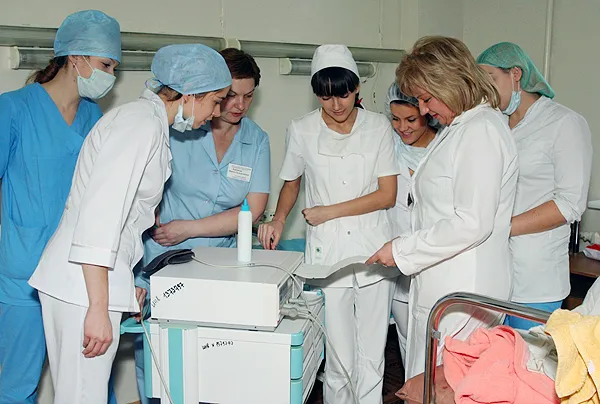
All the programs of further education are practice-oriented. In the process of study, students get acquainted with the work of all departments of the obstetric and gynecological hospital, master practical skills under the guidance of experienced teachers. Particular attention is paid to the study of theoretical issues and the development of practical skills for providing emergency care to pregnant women and gynecological patients, the possibility of their use in independent work.
Educational resources include a vast bank of full-text educational materials and visual aids, a considerable part of which has been created by the Department of Obstetrics and Gynecology teaching staff.
We have innovative training programs and electronic educational and methodical complexes (e-learning BSMU), training manuals on the topics of practical classes which address the changing requirements of healthcare and the needs of our patients. In order to improve the teaching process, the Department conducts open practical classes and lectures, master classes.
Education at the Department of Obstetrics and Gynecology is practice oriented. Simulation training in the Laboratory of practical training of the Belarusian State Medical University (Simulation Centre) is an important pillar of the training system and educational process at the department. Our educational strategy is structuring from knowledge to skills, and then to clinical activity.
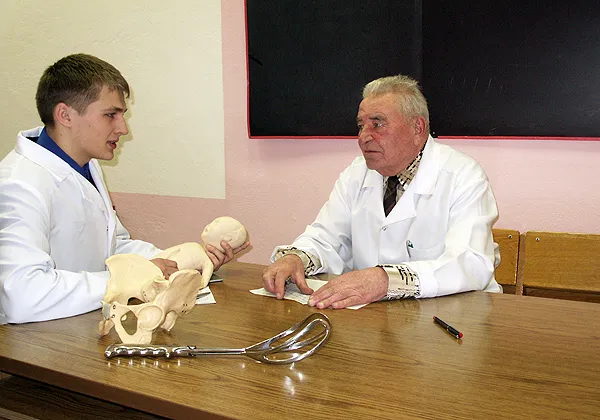
Some examples of equipment, tools, models, trainers or mannequins include:
- Basic birthing mannequins
- Advanced full-scale birthing simulator
- Neonatal mannequins for basic resuscitation
- Perineal repair trainer
- Basic gynecological training models
- Presentations, videos and implementation tools, including management algorithms.
To ensure future success for all of our graduates, we provide comprehensive examinations such as the Objective Structured Clinical Examination (OSCE).
The faculty members are constantly working on the development of passports for the OSCE examination stations for students who have completed medical clinical practice and graduates of educational organizations who have received higher education on the educational program in accordance with the State Educational Standard.
Continuing Education
The department trains subordinators of obstetricians-gynecologists at the VI year of the Faculty of Medicine (45-50 people annually).
Every year 40-50 interns are trained at the clinical bases of the department in accordance with clinical curriculum. Every year, 2 times a year, an interview is carried out with intern doctors and their tutors and the work done is quarterly recorded in reports and regularly heard at a meeting of the department. All intern doctors pass distance testing on a quarterly basis in the specialty “Obstetrics and Gynecology”.
Our clinical residency training is founded on the care of a diverse patient population and includes Maternal and Fetal Medicine, Family Planning, Reproductive Endocrinology and Infertility, Pediatric and Adolescent Gynecology, Urogynecology.
Clinical residents are trained for full-time (2 years of study) and part-time (for 3 years) training. Guidance for the training of clinical residents is carried out by experienced staff of the BSMU departments. All supervisors have PhD degrees such as doctor of medical sciences or candidate of medical sciences. Educational programs are based on current experience and meet Belarusian and international requirements for the quality of the organization of the educational process.
In addition to clinical rotations, the curriculum includes lectures, simulation programming, and conferences. Our residents work with faculty members who have a wide variety of clinical and research interests.
On completing the course of training clinical residents pass the final examination in the specialty. After graduation residents receive the Certificate on specialized training in medicine at clinical residency (both in Russian and English) that certifies the fact of accomplishing training in the chosen specialty.
Published educational resources
The staff of the department carries out a large amount of publication work. In 2015 - 2020 the following educational guidelines were published:
- “Laparoscopic technologies in gynecology”
- “Uterine bleeding during puberty: diagnosis, treatment, rehabilitation”
- Hysteroscopy, hysteroresectoscopy
- “Obstetrics: The Issues of Pregnancy, Labor and Puerperium”
- Terminology, diagnosis and therapy of abnormal uterine bleeding at reproductive age
- Bleeding in the early postpartum period
- Passport of the examination station of the objective structured clinical examination (OSKE) for the 5th year
Elective courses on the most pressing problems of obstetrics and gynecology for students of the medical faculty have been developed and successfully introduced into the educational process:
- “Fundamentals of ultrasound diagnostics in obstetrics and gynecology”
- “Endoscopic methods of diagnosis and treatment in gynecology”
- “Infertility”
Elective courses for students of the pediatric faculty:
- “Counseling adolescents on reproductive health issues”
- “Ultrasound diagnostics in pediatric gynecological practice”
- “Endoscopic methods of diagnosis and treatment of reproductive disorders in adolescents”
In the discipline “Obstetrics and Gynecology” developed, approved and registered 19 electronic educational complexes (EUMK) in Russian:
- In practice “Medical clinical practice in obstetrics and gynecology” for the specialty “General Medicine”
- In practice “Medical clinical practice in obstetrics and gynecology” for the specialty “Pediatrics”
- In the discipline “Obstetrics and Gynecology” for the specialty “General Medicine”, subordination in emergency medical care
- In the discipline “Obstetrics and Gynecology” for the specialty “General Medicine”, subordination in otorhinolaryngology, ophthalmology
- In the discipline “Obstetrics and Gynecology” for the specialty “General Medicine”, subordination in oncology, pathological anatomy
- In the discipline “Obstetrics and Gynecology” for the specialty “General Medicine”, subordination in psychiatry-narcology with psychotherapy
- In the discipline “Obstetrics and Gynecology” for the specialty “General Medicine”, subordination in sports medicine
- In the discipline “Obstetrics and Gynecology” for the specialty “General Medicine”, subordination in neurology
- In the discipline “Obstetrics and Gynecology” for the specialty “General Medicine”, subordination in obstetrics and gynecology
- In the discipline “Obstetrics and Gynecology” for the specialty “General Medicine”, subordination in general medical practice
- In the discipline “Obstetrics and Gynecology” for the specialty “General Medicine”, subordination in surgery
- In the discipline “Obstetrics and Gynecology” for the specialty “General Medicine”, subordination in therapy
- In the discipline “Obstetrics and Gynecology” for the specialty “General Medicine”, subordination in anesthesiology and resuscitation
- In the discipline “Obstetrics and Gynecology” for the specialty “General Medicine”, subordination in general medical practice IFIU
- In the discipline “Obstetrics and Gynecology” for the specialty “Pediatrics”, subordination in pediatric surgery
- In the discipline “Obstetrics and Gynecology” for the specialty “Pediatrics”
- In the discipline “Obstetrics and Gynecology” for the specialty “Preventive Medicine”
- In the discipline “Obstetrics and Gynecology” for the specialty “Dentistry”
- On the discipline “Obstetrics and Gynecology” for the specialty “General Medicine”.
4 EUMKs in English have been developed, approved and registered:
- In practice “Medical clinical industrial practice in obstetrics and gynecology” for the specialty “General Medicine”
- In the discipline “Obstetrics and Gynecology” for the specialty “Dentistry”
- In the discipline “Obstetrics and Gynecology” for the specialty “General Medicine”
- In the discipline “Obstetrics and Gynecology” for the specialty “General Medicine”, subordination in general medical practice IFIU.
All EUMKs work on the basis of the MOODLE distance learning system. In addition to the main modules with normative and organizational information, thematic methodological recommendations, tests for self-control, situational tasks with solution standards, basic and additional literature have been developed for each lesson. Electronic educational and complexes are regularly updated and supplemented with relevant information.