
Organization, content, quality of training (Information on the main activities of the Department)
The Department of Public health and health care attaches great importance to improving the quality of teaching and incorporation of the most efficient educational technologies of public health, paying attention to all the specific aspects of health care.
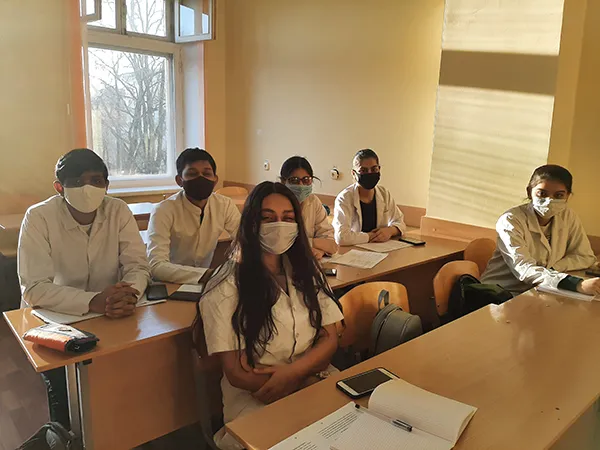
The planning and organization of the educational process at the Department is carried out in accordance with the educational standards of the first level of higher education and standard curricula for the following specialities:
- 1-79 01 01 “General Medicine”,
- 1-79 01 01 01 Military medical case,
- 1-79 01 02 “Pediatrics”,
- 1-79 01 03 “Preventive medicine”,
- 1-79.01.07 “Dentistry”,
- 1-79.01.08 “Pharmacy”
Postgraduate education is conducted at the Department:
- for Clinical residents -Teaching Course «Fundamentals of Health Management»;
- for Postgraduate students - Teaching Course 'Fundamentals of Medical Statistics' cycle;
- for Master of Science students - Teaching Course «Fundamentals of Medical Statistics»
The organization of the educational process for each academic year is regulated by the order of the university «On the organization and methodological support of the educational process at the first level of higher education».
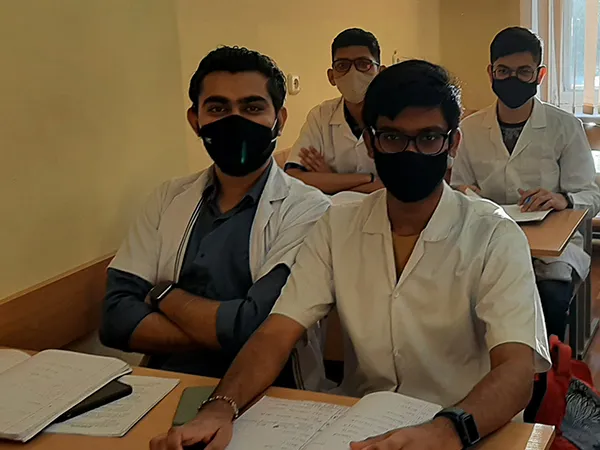
The training sessions take the form of lectures, seminars, workshops and laboratory exercises.
Teachers use traditional individual and group forms of work with students.
Individual forms: interview, verbal interview, written exercises, individual tasks on calculation and analysis of statistical data, work with training computer programs.
Group forms: group work in class, group creative tasks.
Different teaching methods are used:
- Lecture,
- Presentation of the report;
- Illustrations, demonstrations, both conventional and computer-based;
- Writing and presenting a paper,
- Doing practical work,
- Independent work with directories and literature (printed and electronic),
- Compilation of a thematic collection of literature sources, internet sources,
- Independent written exercises
- Independent computer work,
- Student computer testing.
Modern information technologies are used in the teaching process:
Computer test control (TTESTER and OZ testing system)
internet resources,
programs for statistical data processing (Statistica for Windows 10.0),
educational computer programs,
computer presentations of lectures,
on-line conferences.
International Forum on «Public Health and Emergency Workforce: Competency-based Education», hosted by Zhejiang University School of Public Health (China)
From April 19th to 21st, 2024 The Department of Public Health participated in the International Forum on Public Health and Emergency Workforce: Competency-based Education, hosted by Zhejiang University School of Public Health, was grandly convened at the Zijingang Campus of Zhejiang University.
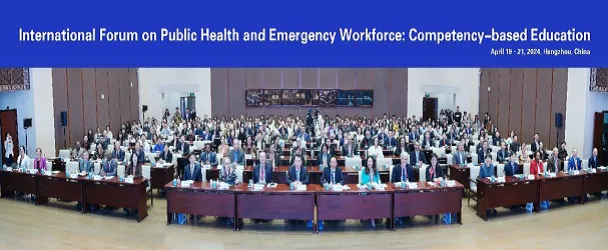
Professor of the Department of Public Health and Public Health Moroz I.N. took part in the Forum, including in the session ‘Optimising Public Health Education: Theoretical Insights, Curriculum Strategies and Textbook Development’, where she made a report ‘The training of specialists in public health at the Belarusian state medical university’.
Over 240 guests attended the forum, including prominent scholars in the field of public health from 58 globally renowned universities across 20 countries and regions, as well as representatives from esteemed international organizations and government agencies such as the World Health Organization (WHO), the Bill & Melinda Gates Foundation, the Global Network for Academic Public Health (GNAPH), the Chinese Center for Disease Control and Prevention, the Health Commission of Zhejiang Province, the U.S. Centers for Disease Control and Prevention, the UK Health Security Agency, the Gulf Center for Disease Prevention and Control, and the Association of Schools of Public Health in Africa.
At this forum, initiated by the Zhejiang University School of Public Health, the Public Health Interprofessional Leadership Alliance (PHILA) was established to strengthen collaboration among global public health institutions. Under the hosting of Xu Fujie, the Deputy Director of the China Country Office of the Bill & Melinda Gates Foundation, Dean Xifeng Wu delivered the PHILA Statement. During the inauguration ceremony of PHILA, representatives from 31 domestic and international organizations came to the stage to witness this milestone event, expressing their support and aspirations for PHILA.