
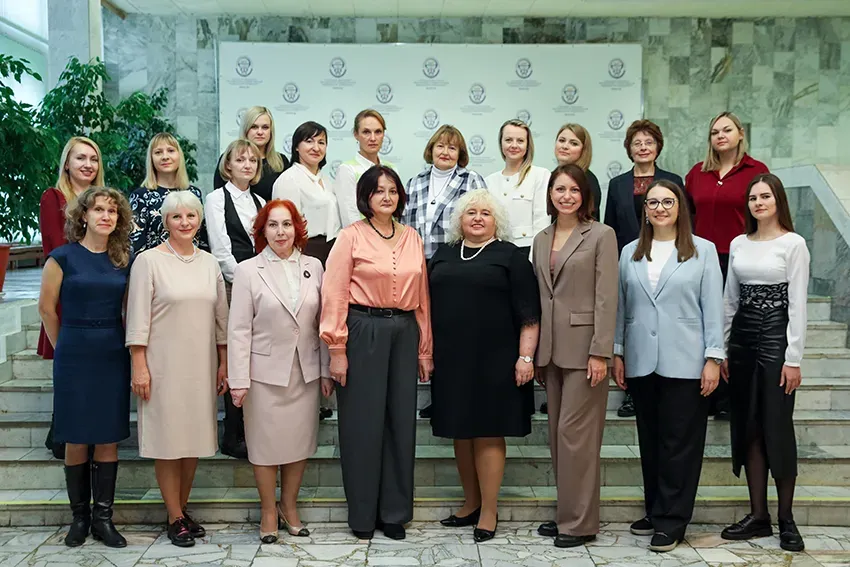
The department is a degree-granting unit for students of the Faculty of Preventive Medicine (specialty: Preventive Medicine). It also provides training for second- and third-year students of the Pediatric Faculty (specialty: Pediatrics) in the academic discipline "Hygiene of Children and Adolescents".
The teaching work is carried out through various types and forms of training sessions in accordance with the schedule. Mandatory training sessions are held in the form of lectures and laboratory classes, using elements of guided independent work by students.
The training is organized using both traditional resources (textbooks, teaching aids, instructional and methodological materials, workshops, and collections of situational problems) and modern educational and informational resources (computer presentations for lectures and laboratory classes, software for calculating and evaluating the results obtained, educational videos, and interactive resources on the university's local computer network and on the Internet).
The department is actively conducting educational, medical and research work. The department has a student scientific circle.
Postgraduate education
The department of hygiene and children’s health protection (with a course in advanced training and retraining) offers adult continuing education programs in the following areas: hygiene, medical prevention, and sanitary and hygienic laboratory research.
At the department, postgraduate training of specialists in state sanitary supervision is conducted in accordance with the "Consolidated Plan for Advanced Training and Retraining of Healthcare Managers and Specialists," approved annually by the Ministry of Health of the Republic of Belarus. The curricula and programs cover current issues in hygiene and the prevention of non-communicable diseases, as well as modern methods of conducting sanitary and hygienic laboratory testing.
The educational process is based on the integration of theoretical knowledge and practical skills through cooperation with leading research and practice centers: the Republican Center for Hygiene, Epidemiology and Public Health, regional centers for hygiene and epidemiology, and other specialized organizations. This approach ensures continuous professional development of specialists and increases their readiness to address pressing issues in the field of public health protection in a changing technological environment.