
The Department of Biological Chemistry of the Belarusian State Medical University will celebrate its 100 anniversary in October 2023. Throughout this period, it has been holding an important place in the system of higher medical education in the Republic Belarus and in solving scientific problems of medical biochemistry. The department trained 12 doctors of sciences, completed 58 candidate dissertations. In the last two decades alone, the staff of the department has published over 700 scientific works, received 14 patents for inventions.
The Department of Biological Chemistry was organized in 1923 within the structure of the Medical Faculty of the Belarusian State University. Initially, organizational work prevailed in the activities of the department: the acquisition of equipment, staffing of teachers, the establishment of the educational process. In creating the material and technical base of the department and the entire medical faculty, many scientific centers and institutes of the USSR, as well as some foreign medical institutions, rendered great assistance.
The university received parcels with various laboratory equipment from America, Austria, Germany and other countries. In the article "On the scientific work of the BSU medical faculty during its existence (1921-1928)", the former dean of the faculty, professor MB Krol (1879-1939 ) wrote:
«Несмотря на то что масса сил и энергии тратилась на организацию кафедр, на организацию соответствующей атмосферы для успешной научной работы, медицинский факультет за короткий срок своего существования которым можно считать 3-4 года, в научном смысле пошел далеко вперед. Наиболее очевидно это из того, что вокруг каждой кафедры уже сложились научные школы со своей методикой, со своей постановкой проблем и с собственными методами их решения».

In the development and strengthening of the departments, financial support was provided by the employees themselves, who used their savings to buy equipment and reagents, providing students with exhibits and textbooks from personal libraries, and designed devices. The head of the Department of Pharmacology, concurrently, the first head of the Department of Biological Chemistry of the Minsk Medical Institute from 1923-1930, Professor Alexander Petrovich Bestuzhev (1880-1946), a graduate of Moscow State University, took an active part in organizing the Department of Biochemistry of BSU at the Faculty of Medicine. He completed several scientific works, including on experimental edema, on the cultures of some medicinal plants, on the stimulating effect of carbonic acid, etc.

One of the first assistants of the Department of Biochemistry was Leonid Evstafievich Taranovich (1886-1975), who graduated from the Faculty of Biology of St. Petersburg University in 1909, and from the Kiev Medical Institute in 1913. Since 1924 he had been working as an assistant at the medical faculty of the Belarusian State University, where he was engaged in teaching and research work at the Department of Biological Chemistry. He wrote the first scientific work performed at the department and published in a medical journal "Biochemischen Zeitschrift". In 1932-1933 and from 1935 to the spring of 1941 L.E. Taranovich acted as head of the Department of Biochemistry at Minsk State Medical Institute.
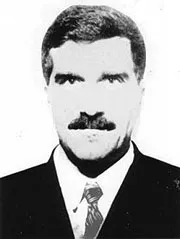
The development of biochemical science in Belarus was influenced by the activities of a prominent Russian biochemist, Professor Georgy Valerianovich Derviz (1897-1980), who graduated from the Faculty of Medicine, Moscow University in 1921. G.V.Derviz was invited to Minsk to organize the Department of Biochemistry, which then included teaching organic chemistry. To head the department G.V. Derviz started in 1930. Professor Derviz became not only the real creator of the first department of biochemistry in Belarus, but also the first educator of biochemical personnel in the Republic. He strove to organize the pedagogical process and scientific research in biochemistry in accordance with the best traditions of the Russian biochemical schools. At the initiative of G.V. Derviz, research was carried out on the constitutional biochemistry of farm animals, which at that time was of a pioneering nature. In particular, comparative studies of biochemical parameters (blood proteins) of two breeds of pigs: local Belarusian and English white breeds, - were carried out.

In 1933-1935. The Department of Biochemistry was headed by Professor Nikolai Semenovich Kozlov (1907-1993), who graduated from the Kalinin Pedagogical Institute in 1928.
In 1933-1938. he was the director of the Institute of Chemistry of the Academy of Sciences of the BSSR, at the same time headed the departments of organic and biological chemistry of the Belarusian State University, carried out work on organic catalysis.
Associate professor L.E. Taranovich in 1939 defended his Ph.D. thesis on the topic "The value of urine colloids in the etiology of urolithiasis." Postgraduate students of the Department of Biochemistry of the Minsk State Medical Institute performed scientific work at the Institute of Biochemistry of the Academy of Sciences of the Ukrainian SSR. in 1940 two Ph.D. theses were defended: I. B. Entin - on the topic "On the relationship between lipase and ascorbic acid" and N. E. Glushakova - "Content of adenosinotriphosphoric acid in muscles at various functional conditions".

In 1941, shortly before the outbreak of war, the leadership of the department passed to Professor A.N. Parshin, who studied the enzymatic properties of proteins. Under his leadership, the assistants of the department carried out the following works: N. B. Dvorson "Enzymatic cleavage of carnosine and anserine in isolated kidneys and liver", V. Ya. Guterman - "The influence of tyrosine on pepsin"; I.B. Entin - "Chemical products of the breakdown of a protein molecule absorbed by the small intestine." Further research on these topics was interrupted in connection with the Great Patriotic War of 1941-1945. The fate of the department staff was tragic: I. B, Entin died at the front, N. B Dvorson - in captivity. During the war L.E. Taranovich remained to work in occupied Minsk in medical institutions.

From 1944 to 1949 the department was headed by Potap Markovich Belyaev (1895-1990), who graduated from BSU in 1930. During this period (1944-1950), the Department of Biochemistry studied the effects of fasting on protein metabolism; the influence of individual vitamins on metabolism, special attention was paid to the study of the correlative relationship between the functions of the adrenal and insular systems.

For 20 years (1950-1970), the Department of Biochemistry at Minsk State Medical Institute was headed by Mikhail Fedorovich Merezhinsky (1906-1970), who graduated from the Odessa Medical Institute in 1930. With his participation, the Central Research Laboratory and the Laboratory of Biophysics and Electronics were created at the Minsk Medical Institute, which marked the beginning of highly effective scientific biochemical research in Belarus.
M.F. Merezhinsky was the organizer and member of the council of the Belarusian Biochemical Society, a member of the presidium of the All-Union Biochemical Society. Research conducted at the department under the leadership of M.F. Merezhinsky was devoted to the study of metabolic reactions of the body to various types of tissue damage; mechanism of action and biological role of vitamins; metabolism of animal tissues in various conditions of the thyroid gland, etc.
Since 1943, Professor M.F. Merezhinsky has been studying biochemical changes in trauma, which was dictated by the requirements of wartime. The main problem that the staff of the department worked on in the 50s. was the study of the metabolic reaction of the body to various types of tissue damage: bone fractures, thermal injuries, the effect of ionizing radiation. P. M. Belyaev, N. Ye. Glushakova, F. M. Laguto, L. Ye. Taranovich, G.L. Taranovich. A.S. Shifman, E.I. Yadvinskaya and others. For the period 1950-1958. the staff of the department has published over 50 works. The results of the research carried out at the department. found their reflection in the monographs of MF Merezhinsky "Vitamins and their participation in metabolic processes" (1954); "Normal processes of carbohydrate metabolism)" (1956); "The mechanism of action and the biological role of vitamins" (1958), MF Merezhinsky was the author of the first manual on clinical biochemistry in Belarus "Fundamentals of Clinical Biochemistry" (1965), some of the provisions of which have not lost their significance at the present time.

Since 1960, the direction of scientific research at the department has changed: its employees studied the metabolism of rat tissues at various functional states of the thyroid gland, the relationship between the metabolic response of the body to the action of ionizing radiation and the functional state of the thyroid gland (P.M.Belyaev, N.E Glushakova, M. A. Kilchevskaya, F. M. Laguto, E. M. Misyuk, E. I. Oletskiy, G. L. Taranovich, etc.) and also studied nucleic acid and energy metabolism in tumors of animals treated with antitumor antibiotics (H, E Glushakova, G. L. Taranovich), studied the tissue spectrum of enzymes in tumor-bearing animals and its dependence on the content and distribution of mitochondria in cells (T. S. Morozkina), investigated the conformational states of the mitochondrial membrane and their relation to energy conjugation processes (E. P. Titovets), found out the significance of the specificity of the nucleotide composition of nucleic acids for constructing a classification of bacteria (A.A. Kukulyansky) and others.
1970-1974 Nina Efimovna Glushakova (1911-1992), who graduated from the Minsk Medical Institute in 1936, was in charge of the Department of Biochemistry at Minsk State Medical Institute. Under the leadership of N.E. Glushakova, the department conducted research to study the effect of general radiation on the body and biochemical changes in hypothyroidism.

Since 1974, the department was headed by Professor Viktor Klimentievich Kukhta, (1937 - 2017), who graduated from Minsk Medical Institute in 1960. His research was devoted to the study of myocardial metabolism. Since 1974, the department has been conducting research on the study of myocardial metabolism. the peculiarities of lipid metabolism in case of mitral valve insufficiency (A.D. Taganovich, 1981) were clarified, enzymes in the myocardium were studied in various variants of its hypertrophy (A.V. Kolb, 1986), the energy metabolism of a malignant tumor was investigated (T.S. Morozkina, 1978 ), the physicochemical properties of the mitochondrial actin-like protein were determined (A.N. Stozharov, 1987).
The department also studied the influence of harmful environmental factors on humans against the background of various pre- and pathological conditions of the body. In particular, the changes in the chemical composition and activity of membrane enzymes under the isolated and combined action of heavy metals (lead, chromium) and adrenaline were studied (I.I. Shkrebneva, 1983); the influence of the isolated and combined action of nitrosodimethylamine and adrenaline on the processes of cell detoxification and indicators of the structural and functional state of cell membranes (T.I. Dadyko, 1986). The molecular mechanisms of interaction between the surfactant and lung macrophages and their role in the development of interstitial pneumofibrosis have been investigated (A.D. Tahanovich, 1992) and others.
Of great practical importance is the developed at the Department of Biochemistry of the Moscow State Medical Institute antioxidant complex of vitamins by Professor T.S. Morozkina's, widely used in various clinics and hospitals of the republic, received the State Prize of the Republic of Belarus in 1999.

From 2002 and up to now the Department of Biochemistry is headed by Doctor of Medical Sciences, Professor Anatoli Dzmitrievich Tahanovich. He is one of the leading biochemists in the Republic of Belarus. Awarded with the Certificate of Honor of the National Assembly of the Republic Belarus (2012), the gratitudes of the President of the National Academy of Sciences of the Republic Belarus, the badge "Excellence in Health Care".
Prof. Tahanovich A.D. is doing a lot of social work. He is a member of two Councils for the defense of dissertations, the chairman of the expert commission for fundamental research at the Ministry of Health of the Republic of Belarus, a member of the European Respiratory Society. Since 1976, his scientific and practical activities are concentrated in the field of clinical biochemistry and clinical laboratory diagnostics. He has published more than 380 scientific works, he is the author of 12 inventions, more than 50 educational and teaching aids, monographs. He, in co-authorship, prepared and published 4 textbooks for students of Belarusian medical universities. Some of these textbooks and manuals you can find on the pages of our site.
The department has developed standard programs in biological chemistry for students of medical, pediatric, medical-preventive and dental faculties of medical universities, a program for a candidate exam in biological chemistry, educational standard of the Republic of Belarus “Higher education. Second stage (magistracy). Specialty 1-31 80 11 biochemistry ". In terms of implementation of the innovative educational project "Computer testing at BSMU" under the guidance and with the participation of prof. Tahanovich A.D., a system of teaching and monitoring computer testing in biological chemistry has been created. Two elective courses have been developed for 6th year students of the medical and pediatric faculties of BSMU, an elective course "Clinical Biochemistry" for undergraduates, an elective course "Pharmaceutical Bromatology" for the specialty "Pharmacy", electronic educational and methodological complexes on biological chemistry for students of BSMU have been compiled and certified.
Together with the staff of the University of Pittsburgh (USA) prof. Tahanovich A.D. developed a course of problem-oriented training of students of medical universities "Structure and metabolism of the cell." The exchange of experience with colleagues from the Philips-University of Marburg (Germany) and the University of Leipzig (Germany) allowed prof. Tahanovich to master and implement at the Department of Biochemistry of the Belarusian State Medical University, advanced technologies for the isolation and subsequent cultivation of lung cells, methods for assessing their functional activity.
Under the guidance of prof. Tahanovich A.D. ten Ph.D. theses have been defended. During 2003 - 2006 the department conducted research within the framework of the project of the Fund for Fundamental Research RB (FFI RB). The mechanisms of the effect of hypoxia and hyperthermia on alveolar macrophages (E.M. Barabanova), the features of enzymatic cleavage of phospholipids by alveolar macrophages in health and in acute lung injury (Golovach O.A.), biochemical parameters of exhaled air condensate to assess the degree of damage to lung tissue in the process of mechanical ventilation and optimization of the choice of the ventilation mode (Smirnov A.S.). AT
In 2007, as a result of joint research of the postgraduate student of the department Said A. Moallem (Iran) and the staff of the Republican Scientific and Practical Center of Phthisiology and Pulmonology of the Ministry of Health of the Republic Belarus, biochemical markers were proposed for the differential diagnosis of tuberculous pleurisy (Instructions for use were approved by the Ministry of Health of the Republic of Belarus)
Since 2011, the pathogenetic mechanisms of lung damage due to hyperoxia in premature infants and the development of bronchopulmonary dysplasia have been studied (prof. Taganovich A.D., associate professor I.L.Kotovich, associate professor Zh.A. Rutkovskaya), methods for obtaining new physiologically active compounds (associate professor N.N. Kovganko). Together with the State Scientific Institution “Institute of Experimental Botany named after V.F. Kuprevich National Academy of Sciences of Belarus ” have been studied the influence of lectins of medicinal plants on the functional activity of lung cells (prof. Tahanovich AD, associate professor Devina EA).
In 2011, within the framework of the Fund of fundamental research of Belarus, a project was successfully completed to study the effect of cigarette smoke tar on the functional activity and indicators of lung cell metabolism. (associate professor Devina E.A., Prinkova T.Yu.).
Since 2011, the department has been studying the molecular and cellular features of the development of COPD in nonsmokers (Assoc. Prof. Kadushkin A.G.).
Within the framework of the program "Medicine and Pharmacy" and the state scientific and technical program "New technologies for diagnostics and treatment", the task was performed "To study the populations of lymphocytes and their protein ligands in the peripheral blood of patients with chronic obstructive pulmonary disease and to find markers for predicting the nature of the course of this disease" (prof. Tahanovich A.D., Assoc. Prof. Kadushkin A.G. (deadline - 2014-2016).
Within the framework of the State Scientific and Technical Program “New technologies of diagnostics and treatment”, subprogram “Oncology”, the scientific project “To develop and implement a system of laboratory prognostic criteria for biological activity of tumor in patients suffering from uterine cancer and the effectiveness of their treatment based on indicators of growth factors and receptors in the blood "(Implementation deadline - 2011-2017). leaders prof. Taganovich A.D., prof. Prokhorova V.I., principal investigator Prinkova T.Yu. had been held.