
In 1924, the Department of Internal Medicine No. 1 was established at the Minsk State Medical Institute (MSMI). At the time, it was known as the Department of the Second Therapeutic Clinic of Belarusian State University. It was headed by Fedor Oskarovich Gausman, a member of the Academy of Sciences of Belarus and an Honoured Scientist.
Fedor Oskarovich Gausman
By the time he was appointed to the department, F. O. Gausman had earned a reputation as a scholar of European standing, thanks to his fundamental research in gastroenterology. His extensive clinical experience, research talent and knowledge of international literature enabled him to make significant contributions to many areas of internal medicine.
The department’s faculty and their students pursued a broad range of research, addressing pressing medical questions with the methods available at the time.
F. O. Gausman authored a number of monographs and textbooks published in Berlin, Moscow and Minsk. In 1930 and 1933, he lectured to physicians in Karlsbad, Kissingen, Königsberg, Frankfurt and Berlin.
He trained hundreds of physicians. His students and the department’s first members—I. M. Lipets, M. I. Khurgin, M. E. Vasilevsky, M. M. Vladysik and B. I. Trusevich—later became professors at universities across the USSR.
Academician Gausman’s stature, scholarly talent and legacy of clinical practice shaped the department’s future. It went on to become the republic’s leading training centre for physicians specialising in internal medicine.
Sergei Mikheevich Melkikh
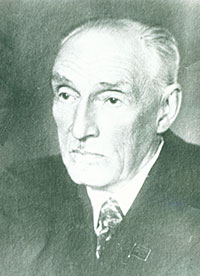
In 1944, the department was headed by Professor Sergei Mikheevich Melkikh, a corresponding member of the Academy of Sciences of the Byelorussian SSR and an Honoured Scientist. A student of F. O. Gausman, he carried on his mentor’s traditions.
During this period, the department’s faculty researched tuberculosis, endocarditis, suppurative lung diseases and colibacillary sepsis. Melkikh’s students—Professors L. Ya. Sitterman, R. E. Ginzburg and E. L. Marshak—went on to head departments and divisions at medical and research institutes.
In 1949, Professor Pavel Ivanovich Stepanov became head of the department. He continued its research programme and introduced what were then advanced diagnostic techniques at the clinic, including bronchoscopy, gastroscopy and electrocardiography. He also equipped the clinical and biochemical laboratories with state-of-the-art instruments.
Pavel Ivanovich Stepanov
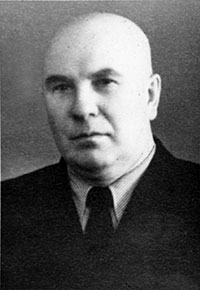
Professor Stepanov and the department’s staff played an active role in organising and holding the First Republican Congress of Physicians in Belarus, which took place in December 1949.
The congress established the Belarusian Scientific Society of Physicians, with Professor Stepanov as its chair.
Associate Professors G. Kh. Dovgyallo and I. E. Novash, and Assistant Professor Ya. V. Neyfakh, joined the society’s board—a sign of the department’s standing.
From 1954 to 1955, the department was headed by Professor I. E. Novash.
Professor I. E. Novash
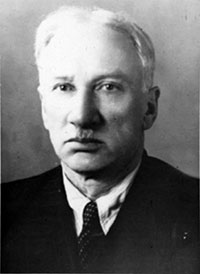
Novash was a typical representative of the clinical school of medicine: an outstanding physician with expertise not only in diagnosing and treating internal diseases, but also in infectious diseases, endocrinology and tuberculosis.
He was a steadfast leader in the training of practising physicians and young educators. Nearly every new member of the teaching staff trained under this remarkable clinician and teacher.
In 1955, the department was headed by Professor Georgy Khrisanfovich Dovgyallo, an Honoured Scientist of the Byelorussian SSR and a student of F. O. Gausman and S. M. Melkikh.
Professor Georgy Khrisanfovich Dovgyallo
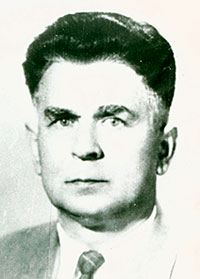
A talented leader, outstanding clinician, creative thinker and erudite scholar, G. Kh. Dovgyallo built a highly skilled team. The department’s staff, postgraduate students and researchers were distinguished by their commitment to advancing clinical practice and teaching, as well as by their creative approach to research.
Dovgyallo’s expertise extended well beyond any one specialty. The department’s main research areas included cardiology, rheumatology, gastroenterology and haematology.
Under his supervision, 36 dissertations were completed, including eight doctoral theses. Research in cardiology was conducted by A. G. Barkhanova, G. A. Vechersky, N. F. Volkov, V. V. Gorbachev, I. S. Gulko, V. M. Zhavrid, V. M. Tishkovsky, E. V. Frolenko and M. S. Khrutskaya; in rheumatology, by I. I. Goncharik and G. P. Matveykov; in gastroenterology, by A. I. Gurskaya; and in haematology, by N. I. Artishevskaya, L. V. Vologa, A. S. Zaitseva and V. L. Kryzhanovsky.
Many of Dovgyallo’s students went on to head departments specialising in internal medicine at the Minsk and Grodno medical institutes, the Belarusian Institute for Advanced Medical Training and research institutes. They included Professors G. A. Vechersky, N. F. Volkov, I. I. Goncharik, V. V. Gorbachev, I. S. Gulko, E. I. Zaitseva, G. P. Matveykov and V. G. Tishkovsky.
E. F. Frolenko
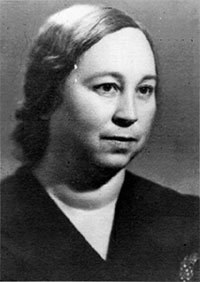
The Second Department of Internal Medicine, as well as courses in occupational diseases and endocrinology, were established on the basis of Department No. 1. For many years, Professor Dovgyallo served as Chief Physician of the Ministry of Health of the Republic of Belarus and headed the Republican Scientific Society of Physicians. He was also a member of the Presidium of the All-Union Scientific Society of Physicians. Dovgyallo became the founder of the republic’s modern school of internal medicine.
E. F. Frolenko headed the department from 1974 to 1976. She had been a member of the department since the post-war years.
Her candidate’s and doctoral dissertations focused on cardiorheumatology. She also devoted considerable attention to introducing functional diagnostic methods at the department.
For more than ten years, she headed the postgraduate training department for physicians.
Professor Ivan Iosifovich Goncharik
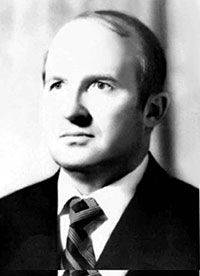
In 1976, Professor Ivan Iosifovich Goncharik became head of the department. Research continued in cardiology, with dissertations completed by I. A. Zhmachenko; in rheumatology, by N. I. Artishevskaya, T. V. Borovaya and A. E. Buglova; in endocrinology, by T. V. Mokhort; and in occupational medicine, by O. A. Tsygankova.
Gastroenterology became the department’s leading research area. Its focus included the clinical and biochemical mechanisms of gastroduodenal ulcers and diseases of the biliary system, as well as approaches to their treatment. Researchers included Yu. Kh. Marakhovsky, A. I. Bliznyuk, V. D. Lukashevich, N. P. Prigun, N. N. Silivonchik, A. M. Fedoruk and Li Mun Guk, a citizen of the Democratic People’s Republic of Korea.
The department’s main research question was how gallstone disease develops. Understanding these mechanisms was important for preventing the disease and treating its early stages conservatively. The research led to original techniques and methods, some of which were patented.
The Republican Centre for Gastroenterology was established on the basis of the department. It became a leading institution for addressing research and clinical challenges in gastroenterology and for developing the republic’s gastroenterology services.
The department’s research school built extensive ties with many institutions, including the National Academy of Sciences of the Republic of Belarus, Belarusian State University, the Belarusian Institute for Advanced Medical Training, the Belarusian Research Institute of Epidemiology and Microbiology, the Belarusian Research Institute of Powder Metallurgy, the Russian Medical Academy, the Russian Research Institute of Gastroenterology, the St. Petersburg Academy of Postgraduate Education, Smolensk State Medical University, Vilnius State University, the Gastroenterology Centre of the Riga Medical Institute, the Tajik Research Institute of Gastroenterology and a university in Pyongyang, DPRK.
The school’s work gained recognition abroad. Yu. Kh. Marakhovsky, for example, became a member of the European gastroenterology association. Research in diabetology, led by T. V. Mokhort and Z. V. Zabarovskaya, was also a priority.
Professor Nelly Ivanovna Artishevskaya
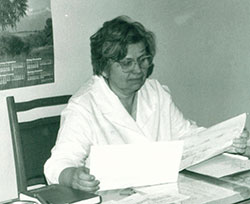
Professor Nelly Ivanovna Artishevskaya headed the department from 1989. Under her leadership, research continued in rheumatology, gastroenterology and endocrinology. The main rheumatology research focused on synovial fluid and the use of intra-articular medication to diagnose and treat joint diseases. Researchers included A. G. Matveykov, N. N. Korchevskaya, E. A. Nareiko and O. V. Pavlovich.
Gastroenterology research examined the clinical and biochemical characteristics of the hepatobiliary system in young people in the Republic of Belarus (N. N. Silivonchik and N. P. Prigun).
Endocrinology research focused on diabetes mellitus (Z. V. Zabarovskaya and A. P. Katushkina). In 1995, Department No. 1 merged with the Third Department of Internal Medicine, headed by Professor E. V. Bardin, whose main research area was cardiology (M. M. Astapenko, O. V. Degtyareva, A. Yu. Pochtavtsev, F. V. Prokopchuk and P. I. Fedin).
Professor Alexander Eduardovich Makarevich
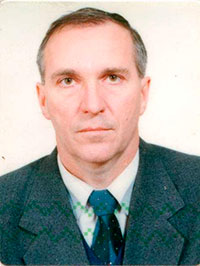
Professor Alexander Eduardovich Makarevich, a member of the European Respiratory Society, headed the department from 1998. His research focused primarily on the pathophysiological mechanisms underlying the progression of chronic bronchopulmonary diseases.
From 2000, pulmonology became the department’s main research area. Four candidate’s dissertations were completed and defended on pathophysiological aspects of chronic obstructive pulmonary disease (COPD) and the treatment of severe community-acquired pneumonia (D. L. Ivashkevich, Yu. Yu. Pankratova, T. V. Zhukova and V. N. Valevich).
Currently, Assistant Professors S. S. Lemeshevskaya and T. V. Kuzmich are conducting research on extrapulmonary manifestations and pulmonary haemodynamic disorders in patients with COPD.
History of the Department of Gastroenterology and Nutrition
The department was established in 1980 at the Belarusian State Institute for Advanced Medical Training. Until 1999, its clinical base was the Gastroenterology Department of Minsk Regional Clinical Hospital. From 2000, it was based at Minsk City Clinical Hospital No. 1, and from 2012 at Minsk City Clinical Hospital No. 10.
In practice, this created a unique teaching unit in the Republic of Belarus and a leading centre for training in gastroenterology and nutrition.
The department’s main research focus is the mechanisms behind the development and progression of chronic digestive diseases. Particular attention is paid to their clinical and pathophysiological features, with the aim of developing standardised approaches to the planning and delivery of medical care and improving its quality.
Professor I. N. Bronovets headed the department from 1980 to 2000. His research focused on the cardiovascular function of patients with chronic diseases of the biliary tract and liver.
Since 2000, the department has been headed by Doctor of Medical Sciences Yu. Kh. Marakhovsky. His doctoral research examined the processes involved in gallstone formation and chronic cholecystitis. This work led him to formulate the vesicular-lipid-peroxidation hypothesis of gallstone formation and propose improved approaches to early diagnosis.
Yu. Kh. Marakhovsky has published more than 250 works, including six monographs, 35 articles in national publications and 28 in international publications.
From the department’s establishment until 1999, its staff included Associate Professor M. N. Sakovich; Assistant Professors V. N. Khomich, G. A. Karaseva and D. N. Ulasevich; and laboratory assistants A. V. Yaroshevich and L. Yu. Sergienya.