The 66-th Session of the United Nations Scientific Committee on the Effects of Atomic Radiation, 2019
The 67th session United Nations Scientific Committee on the Effects of Atomic Radiation 30, October – 6, November 2020.
The 67th session of the United Nations Scientific Committee on the Effects of Atomic Radiation (UNSCEAR) was held online from 30, October to 6, November 2020. The 67th session was attended by delegations from 27 UNSCEAR countries and more than 140 delegates.
Delegation of the Republic of Belarus was participate in the 67th session of the UN Scientific Committee on the Effects of Atomic Radiation (UNSCEAR). The session was attended by Larisa M. Shevchuk, Associate Professor of the Department of Radiation Medicine and Ecology. The public The United Nations Scientific Committee on the Effects of Atomic Radiation (UNSCEAR), was established by the General Assembly of the United Nations in 1955. Its mandate in the United Nations system is to assess and report levels and effects of exposure to ionizing radiation. Governments and organizations throughout the world rely on the Committee's estimates as the scientific basis for evaluating radiation risk and for establishing protective measures.
In 2011, the General Assembly invited Belarus, Finland, Pakistan, the Republic of Korea, Spain and Ukraine to become members of the Scientific Committee, increasing the membership from 21 to 27 States.
Professor Stojarov Alexander has been a representative of the Government of the Republic of Belarus since 2014.
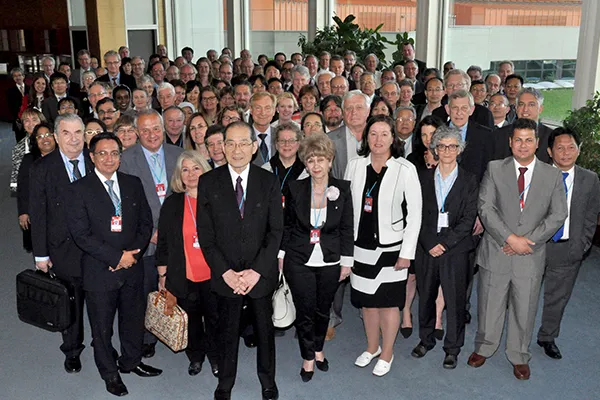
The 62-th Session of the United Nations Scientific Committee on the Effects of Atomic Radiation, 2015
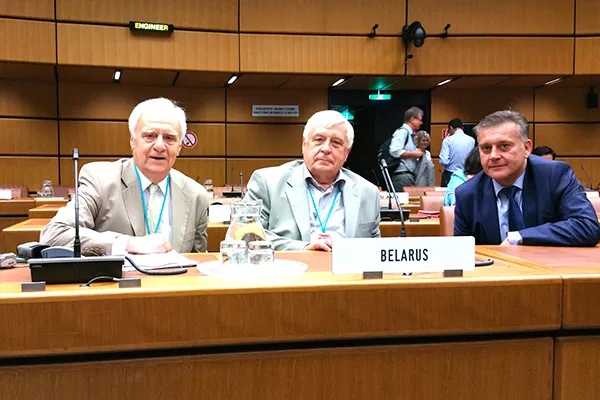
Delegation of the Republic of Belarus at the 63-th session of the United Nations Scientific Committee on the Effects of Atomic Radiation, 2016
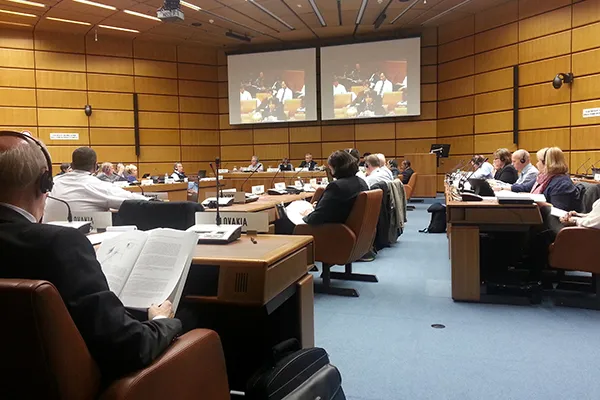
The 60-th Session of the United Nations Scientific Committee on the Effects of Atomic Radiation, 2013
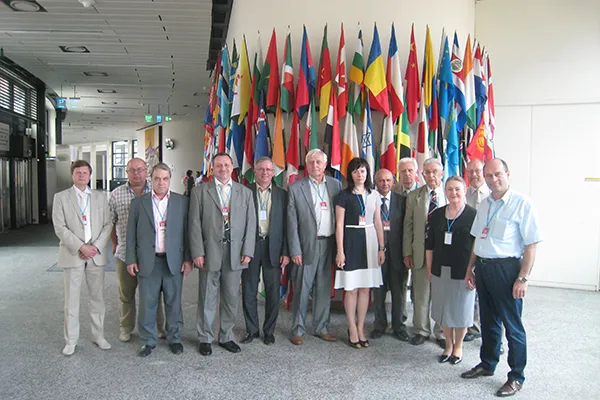
Delegations of the Republic of Belarus and the Russian Federation at the 61-th session of the United Nations Scientific Committee on the Effects of Atomic Radiation, 2014
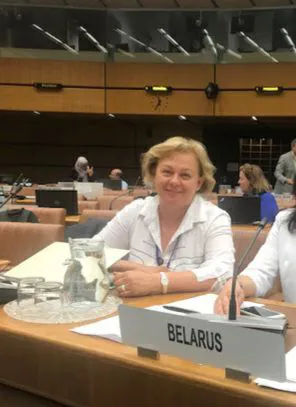
meetings were attended by experts and scientists from international organizations: the World Health Organization, the International Atomic Energy Agency, the World Meteorological Organization, the European Commission, the International Commission on Radiological Protection, the International Agency for Research on Cancer.
Reports on important areas of research in the field of radiation exposure assessment were discussed at the session sessions:
“Assessment of selected health effects and risks associated with radiation exposure”, “Assessment of medical exposure”,
“Assessment of occupational exposure”,
“Lung cancer from radon exposure”,
“Biological mechanisms causing health effects from low doses of radiation”,
“Levels and effects of radiation exposure due to the Fukushima Daiichi accident”. Preliminary results of the report 'Epidemiological studies of radiation and cancer' were presented.
UNSCEAR reported that 87 countries have nominated national contact persons for the submission of data on medical exposures, including the Republic of Belarus.
Session participants discussed the strategy of informing the public about the activity of the UNSCEAR. The Bureau UNSCEAR asked countries for suggestions on how to inform them and emphasized the need to promote the results of the activity of the UNSCEAR.
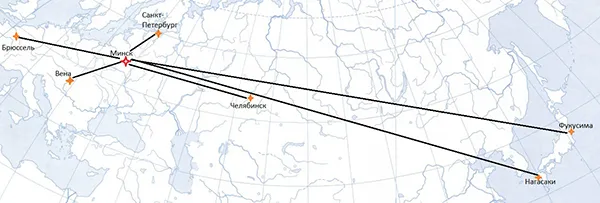
Cooperation with the University of Nagasaki and NASHIM
(Nagasaki Association for Hibakushas' Medical Care)
Participation in the «Medical training in radiation research», Nagasaki

Picture. Sertificate NASHIM
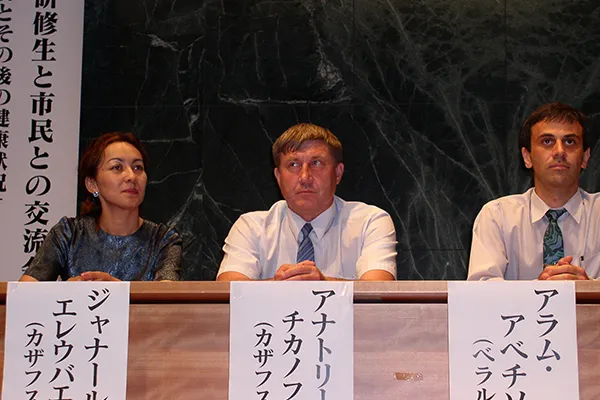
Picture. Meeting with the residents of Nagasaki, 2003.
Cooperation with the Medical University of Fukushima Prefecture
Cooperation in assessing the health consequences of radiation accidents
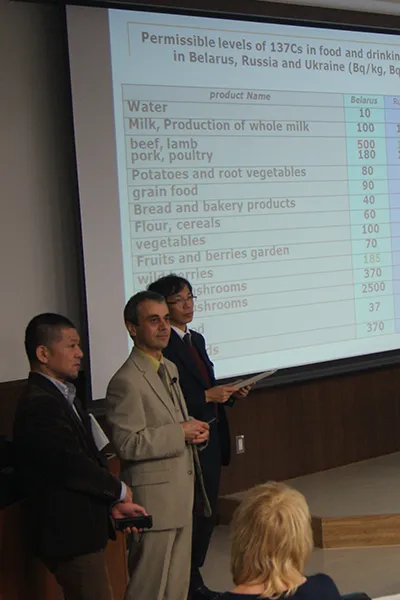
Picture. Meeting with teachers and students of the Fukushima Medical University. Fukushima 2015.
The textbook “Radiation Medicine” was published in cooperation with the Medical University of Fukushima Prefecture in 2020.
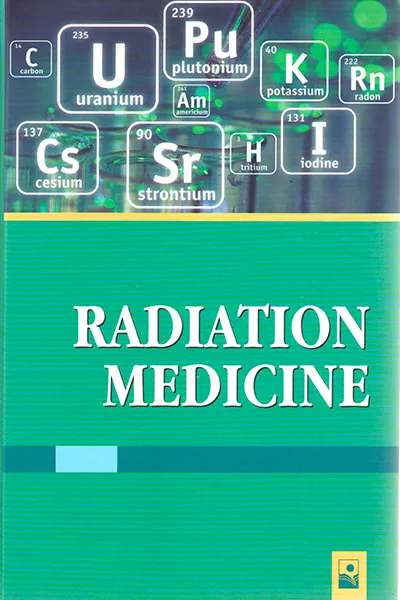
Picture. Tutorial cover.
3. National Institutes for Quantum and Radiological Science and Technology (QST), Fucushima, 2020
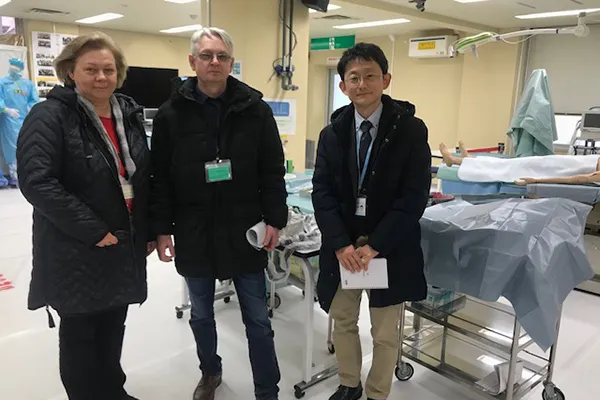
Picture. National Institutes for Quantum and Radiological Science and Technology (QST). Fucushima, 2020
Cooperation with Regional Office for Europe WHO.
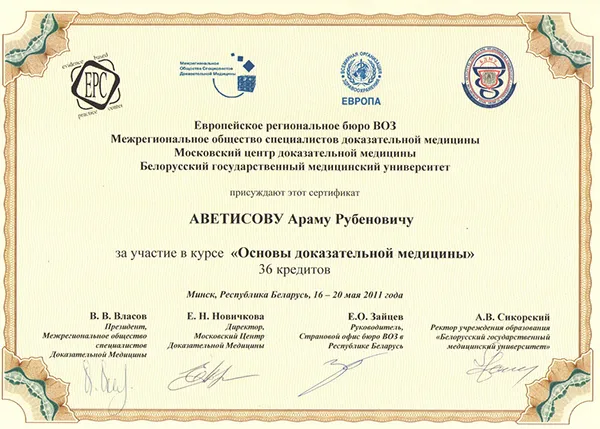
Рarticipation in the training course “Evidence-Based Medicine Basics”, 2011.
Сooperation with scientific and practical centre of Russian Federation.
1. The Nikiforov Russian Center of Emergency and Radiation Medicine.
St. Petersburg, Russia
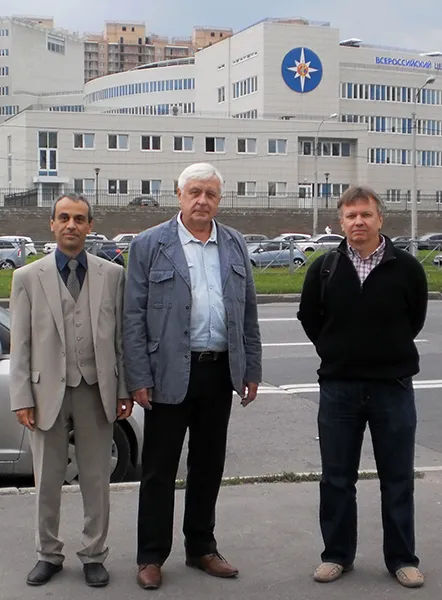
From left to right: A.R. Avetisov, A.N.Stozharov, S.N.Belugin. St. Petersburg, 2014.
2. Ural Scientific and Practical Center for Radiation Medicine, Chelyabinsk, Russia.
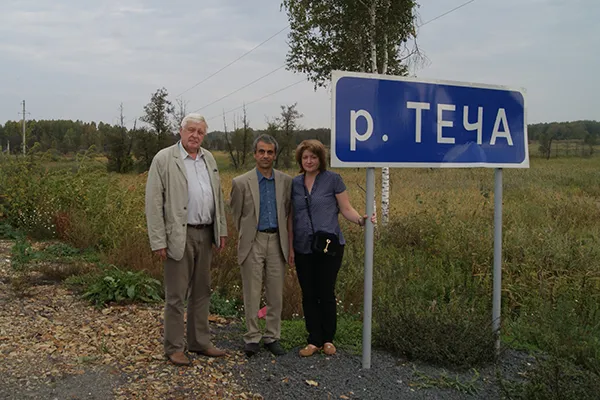
Picture. Visit to the accident site on the river Techa.
From left to right: Stozharov A.N.,Avetisov A.R., Nazarova M.A.,
Chelyabinsk, 2015.
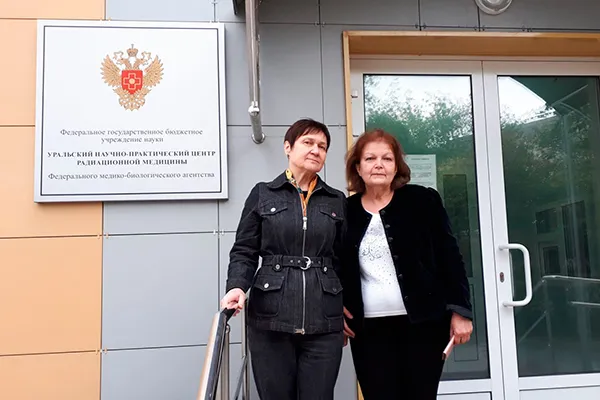
Picture. Visit Ural Center for Radiation Medicine, Chelyabinsk, 2017
Kvitkevich L.A., Keyes G.D.