
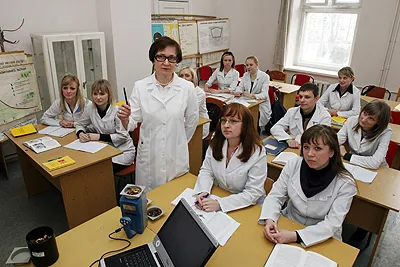
The Department provide academic process within four disciplines: Radiation and Ecological Medicine, Radiation hygiene, Prevention of the adverse effects of physical factors on human health, Laboratory analysis in radiation hygiene.
While studying at the Department, students receive both profound theoretical knowledge and acquire solid practical skills. They learn to calculate the external and internal ionizing radiation doses incurred in humans living on the terrains contaminated with radionuclides through oral intake and inhalation. The students are also provided with the opportunity to gain the skills of operating the dosimetric and radiometric equipment and instruments, the most widely employed at institutions for hygiene and epidemiology, assess the anthropogenic burden imposed on humans in urban ecosystems, carcinogenic risks of xenobiotics included, etc.
Field classes in the Diagnostic Radiology Department, the Radionuclide Diagnosis Laboratory of the Minsk city Teaching Hospital No.10, Centers for hygiene, epidemiology and public health facilitates the students of the preventive medicine faculty to master the most challenging issues of the discipline and to comprehend the approaches for implementation of the relevant methods within the particular stages of sanitary surveillance.
The Department of Radiation Medicine and Ecology provide the academic process for the 2nd year students of the general medicine, pediatric, dentistry, military medicine faculties, of the medical faculty for foreign students, of the 4-6th-year students of the preventive medicine faculty.
Academic process is rooted in the approved standard and working educational curriculums that were originally elaborated by the Department and currently are adhered to at all state medical universities.
The Department have elaborated and issued the publications as follows:
- “Radiation Medicine” - national textbook (2010),
- “Medical Ecology” (2007)
- “Radiation and Environmental Medicine” (2012) – laboratory practicum approved as a tutorial by the Republic of Belarus Education Ministry
- “Radiation Medicine” (2020) – international textbook (in English)
- “Ecological medicine” (2017) – laboratory practicum (in English)
- “Radiation Medicine and Ecology” (2007) – guidelines for the dentistry faculty students.
Annually, the Department hold classes for the 6th year students of the preventive medicine faculty within the 'Prevention of the adverse effects of physical factors on human health' course framework.
Students have an access to desktop computers and unique software applications allowing for modelling and calculation of the values of the electromagnetic energy flux density arising from the cellular communication base stations, the value of a specific absorbed dose (SAR) from a cell phone, etc.
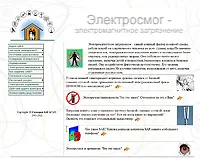
In 2002, through the initiative and efforts of the Department, the elaboration of a distance education system was initiated.
Educational sites Ultraviolet-info (https://uvinfo.bsmu.by/) and “Electrosmog – electromagnetic pollution” (https://electrosmog.bsmu.by/) were created. In a clear comprehensive manner, the latter describes the sources of electromagnetic radiation, the patterns of effects of these ones on the human body, the impact of electromagnetic radiation from base stations of cellular communications and mobile phones, and suggests practices to attenuate adverse health effects of this physical factor.
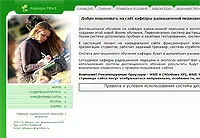
At the same time, the creation of educational sites for students of all faculties was initiated. Shortly the idea was embodied in the effective educational website https://webradecomed.bsmu.by/ of the Belarusian State Medical University Department of Radiation Medicine and Ecology.
The site provides access to an on-line library accumulating all required state regulatory documents. It also contains a task simulator allowing students of all faculties to apply their knowledge and skills to calculate doses of internal and external ionizing radiation incurred in humans in a variety of situations, to calculate the cancer risks arising from the inhalation and intake of different toxic substances. Besides, an introductory section with a distant testing system, a section for makeups of missed classes, section for colloquia retakes in radiation and environmental medicine, department feedback section, updates of the activities of the student scienсe club and the students' outstanding presentations are available on this site for the students of all years of study and faculties.
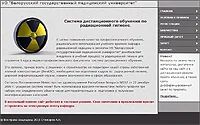
In 2011, under the aegis of the World Health Organization, accounting for the construction of a nuclear power plant in Belarus (BelNPP), a radiation safety website https://radbez.bsmu.by/ was created for the students of the 5-6thyear of the preventive medicine faculty.
Working at this site, the students attend the state regulatory documents on radiation safety and take a 100-question test supposed for assessment with a grade.
The unique software provides calculation of the right answers percentage, creates and e-mails a report to the Department for grading. To facilitate preparation for the test, the site is equipped with a trial testing page, as well as a section for the Department feedback.
Among the wide range of modes to take the graded credit test available at the Department, students prefer this particular format of their knowledge assessment.
Funding from the State Program for the Training of Personnel for the Nuclear Power Industry allowed for a possession of the up-to-date dosimetric and radiometric instruments, which are exploited in research and academic process at the Department.
Additionally, owing to the above State Program, several personal desktop computers were also acquired, which became a base of the computer classroom and indispensable tools for the purposes of everyday and intermediate assessment of students’ knowledge.
The Department maintain the academic process enriched with the considerations of the calculated carcinogenic risks from xenobiotics inhalation and oral intake, from exposure of humans to ionizing radiation, as well as the concept of an acceptable risk, which appears to be of a particular significance in the medical hygienists training. In terms of the start time of employment of the risk assessment concept as the final stage within the social and hygienic monitoring, the Department much preceded the state institutions for hygiene.
Every year, cooperating with University Departments for hygiene, the Department of Radiation Medicine and Ecology hold Olympiads in hygiene, in which all students from the preventive medicine-faculty can participate and present their knowledge in the domain of preventive medicine.