
The building, in which the department of mental illness was organized for the first time in Belarus, was built at the end of the 16th century for the female Orthodox Holy Trinity Monastery, in 1630 the monastery passed to the Uniates.
In 1834, the nuns were transferred to the Myadel monastery in the Vilnius province, and the building was given to the city hospital (the territory of the former 2nd clinic). The history of the provision of psychiatric care in Belarus begins with the allotment of one of the buildings of the Holy Trinity Monastery for the «house of the mourners». It was designed for 40 men and 20 women.
In 1850, the «home of the mourners» was reorganized, it entered the system of charitable institutions. The latter were designed for 173 patients: 40 places for the somatic sick, 20 for the insane, 100 for the poor and 13 for the elderly warriors. In the «Supplement to the all-subject report of the Minsk governor» for 1875, it is indicated that the number of patients in the psychiatric ward was 49, that is, almost three times more than usual.
In 1903, the Minsk hospital was transferred to the jurisdiction of the zemstvo, and the conditions of the mentally ill in the psychiatric department became somewhat better, however, they were still rather difficult.
Restless patients were kept in isolation wards with high-positioned windows, closed bars and a «peephole» in the door for monitoring patients. The patients in these isolation wards were presented to themselves, injured themselves, sometimes severely, were untidy, did not take food. In these conditions, seriously ill patients quickly died. There could be no question of a differentiated maintenance of patients in accordance with their condition: the weak and unkempt were with the calm and agitated patients.Escapes, suicides of patients, murder of one patient by another, attacks on medical crew were the result of extremely inadequate medical supervision of patients, overcrowding of the psychiatric department.
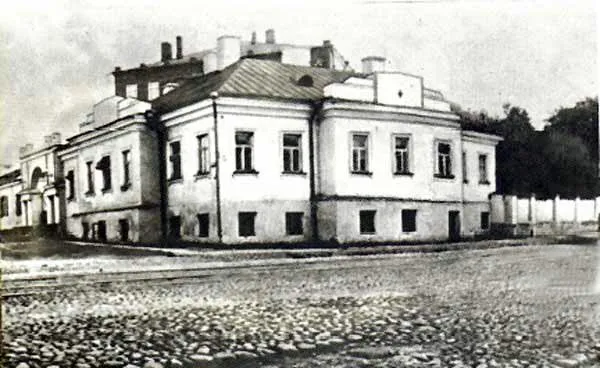
After the Great October Revolution, the zemstvo hospital was reorganized into the 2nd Soviet hospital, which included two psychiatric departments: male and female, located in two buildings.
In 1923, psychiatric departments were expanded to 200 beds, and a building was built in the Novinki colony. Profiling of departments was carried out, calm and restless departments, wards for the somatically weak, mentally ill and patients requiring special supervision were allocated.
In total, 11 psychiatrists worked in the republic in 1924, the shortage of doctors was very noticeable, but there was also a shortage of junior medical crew.
From the memoirs of the assistant of the Department of Psychiatry Tyushkevich Zoya Romanovna:
«During this period of time, the department and clinic were a typical example of old 'lunatic asylums'. Accommodating in old monastery buildings, the thickness of the walls reached a meter or more. The room looked like a prison: on each of the windows there were three bars, as a result of which a constant twilight reigned in all the wards and office premises. Most of the patients did not have any shoes, only some of the so-called conscientious patients had robes. Due to the overcrowding of the department, a significant part of the patients slept on beds together. At the same time, the so-called colonial department of a psychiatric clinic, which was considered a department of the hospital, was located in the village of Novinki. The colony was filled with working chronicles from the clinic. The patients were served by a paramedic living in one of the premises of the colony, and several nurses.Once a week, a resident of the psychiatric department of the 2nd Clinical Hospital visited the colony. At the head of the colony was a director (not a doctor) who ensured the entire economic side of the life of the colony and the hospital».
In 1921, by the decision of the Presidium of the Belarusian CEC, the Belarusian State University was opened. With the organization of the Faculty of Medicine within the BSU, the question arose about the organization of the Department of Psychiatry and the Psychiatric Clinic, which were opened in December 1924 and became the organizational and scientific center of psychiatry in the republic. By competition, Professor A.K. Lents was elected to the Department of Psychiatry, who arrived in Minsk in 1924.
The assistant professor of the department was G.O. Goldblat, assistants R.I. Raskina, M.M. Slutskaya and A.A. Smirnov. Linen, dressing gowns, blankets were purchased - the psychiatric hospital was transformed. However, for a long time there were bars on the windows and insulators for agitated patients. Special clinical beds were not allocated, and Professor A.K. Lents and his colleagues served and systematically consulted a significant number of patients in the entire psychiatric department (about 200 people). A laboratory of human higher nervous activity was organized, where research was carried out both by the staff of the clinic and by students of the medical faculty, members of the scientific student circle at the Department of Psychiatry; clinical laboratory with biochemical section, physiotherapy room. In the psychiatric department, a sanatorium department was allocated (for 30 beds for patients with neuroses and initial forms of mental illness).
In 1927, the staff of the department headed by A.K. Lenz took an active part in the first congress of neuropathologists and psychiatrists, held in Moscow.
In 1927, a commission was created under the People's Commissariat for Health of the BSSR, which included Professor A.K. Lenz. The commission is working out a plan for the development of psychiatry in the republic in the first five years. Particular attention is paid to expanding the bed capacity, nursing care, strengthening the outpatient service, and creating psycho-neurological sanatoriums. At the suggestion of A.K. Lenz in all psychiatric hospitals of the BSSR were removed from the windows of the bars, isolation wards were eliminated, and differentiated placement of patients in departments was carried out.
In May 1932, on the initiative of the department, the first conference of psychiatrists of the BSSR was convened, dedicated to planning in the field of psychoneurology in the second five-year plan. The results of the conference were decisions to increase the bed capacity, create labor colonies, colonies for the disabled, and expand the network of dispensaries.
From 1932 to 1938, a radical reconstruction of the Minsk Psychiatric Clinic was carried out. In 1932, the entire two buildings of the 2nd hospital were transferred to the psychiatric clinic. The buildings are undergoing major repairs: new furniture is purchased, patients receive clothes and shoes, canteens and rest rooms are well equipped. Care items, carpets, many colors are purchased. Isolators for restless patients are transformed into small, cozy wards.
During the reconstruction of the psychiatric clinic and in the future, Professor V.A.Gilyarovsky, who regularly came from Moscow, provided systematic advice and consultations. The old gloomy buildings have been completely rebuilt. The addition of the third floors over the two buildings of the psychiatric hospital made it possible to expand the number of psychiatric beds from two hundred to three hundred.In the restless wards, small wards with 2-3 beds were built. Canteens for patients were equipped with furniture fixed to the floor. Rest rooms were organized in the quiet divisions. Finally, a small pediatric ward was set up for mentally ill children. All rooms in both buildings of the psychiatric hospital were equipped with furniture made according to special designs.In the day rooms, the walls were paneled with oak; artistically executed shades for electric lamps, door frames and mirrors were made. Particular attention was paid to creating a favorable, calm and comfortable environment for patients, well-furnished offices for doctors, treatment rooms for nurses were allocated. Clinical, biochemical, pathophysiological and pathohistological laboratories were organized in specially designated rooms.With the help of health authorities, thanks to the selfless work of the entire team of the clinic and the exceptional organizational skills and perseverance of the chief physician of the hospital, M. M. Kliptsan, the psychiatric clinic of the institute has become an exemplary psychiatric hospital.
Methods of active therapy were mastered: sero-malaria-physiotherapy, treatment with insulin coma, prolonged sleep and convulsive therapy, began to widely use occupational therapy (weaving, shoe and carpentry workshops, art workshop). During this period, the department is doing a lot of work on the organization of neuropsychiatric care in Belarus ... At the same time, the department actively helps in organizing psychiatric care in the cities of Mogilev and Vitebsk, takes part in organizing the work of the Minsk city neuropsychiatric dispensary, which began working in 1927.
The head of the department was entrusted to Professor G.O. Goldblat, who was educated at Yurievsk and Kiev universities. As a scientist, he adhered to constitutional genetic views in psychiatry. His works were perfectly literary processed, enjoyed great success with doctors.
After the departure from Minsk of Professor G.O. Goldblat, the temporary head of the department was assigned to Associate Professor Yu.Kh. Segal, who served as head of the department from 1937 to 1939.
Since September 1939, the Department of Psychiatry was headed by Professor V.I. Ackermann, who received his medical education in Paris, where he studied from 1908 to 1914, specialized in the famous Salpetriere psychiatric clinic.
From 1941 to 1944, the activity of the Department of Psychiatry was terminated due to the temporary occupation of Minsk. The network of psychiatric institutions was completely destroyed. About four hundred sick chronicles of the Minsk psychiatric clinic were taken by German soldiers to Kolodishchi and blown up in bunkers, the sick of the Novinka colony were shot, and many psychiatrists died.
After returning from the evacuation of the Minsk Medical Institute, the restoration of the department of psychiatry and clinic began. The Department of Psychiatry, as before, began its work on the basis of the 2nd Clinical Hospital. In the first post-war years, the psychiatric clinic had only 80 beds. There were no rooms for classes with students. In the treatment rooms, in the pantry, the personnel were the orderlies and nurses of the departments. The clinic continued to pay great attention to the issues of therapy. Sleep therapy, insulin therapy, and other active psychotic therapy have been widely deployed. The clinic trained psychiatric staff.
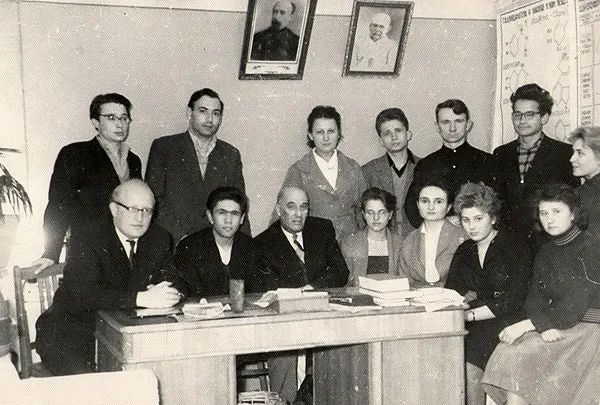
The staff of the department O.I. Olshevskaya and A.K. Plavinsky was the head of the Minsk regional psychiatric hospital «Novinki» in the post-war period. Yu.Kh. Segal was in charge of the physiological laboratory at the Institute of Psychiatry of the USSR Academy of Medical Sciences.
In 1950, Professor V. I. Akkerman left the Department of Psychiatry and moved to Samarkand, where he headed the Department of Psychiatry at the Samarkand Medical Institute. From 1950 to 1951, the department was temporarily in charge of Associate Professor O. I. Olshevskaya. Since the beginning of 1951, Professor M.A. Chalisov.
In 1952, he submitted a memorandum to the Presidium of the Supreme Council of the BSSR, indicating the problems faced by the psychiatric clinic:
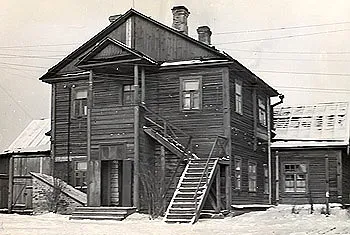
«At present, the clinic has 80 full-time beds, where 85-90 patients are constantly located. The auxiliary rooms are incredibly cramped, a room at the end of the corridor of the men's department is separated for classes with students; for classes with students, one has to occupy the physiotherapy rooms and the nursing office of the women's department. In the men's department, there is one ward for restless patients in a common corridor. Naturally, the screams and noise generated by these patients rush throughout the department. The situation is even worse in the women's department, where restless patients are either in common wards or in the corridor. Due to the extreme tightness of the premises, it is impossible to differentiate patients according to their condition: to separate the calm from the restless, somatically weak, untidy, etc. for the same reason, there is no occupational therapy in the clinic.
Due to the absence of special institutions in the BSSR, the clinic accepts and treats mentally healthy persons suffering from alcoholism and neurotics, in addition, mentally ill children are also treated together with adults. The situation in the clinic is extremely unsightly due to the renovation that has not been carried out for a long time, the lack of furnishings that create comfort (curtains, curtains, tables, chairs, armchairs, paintings, carpets). Patients are deprived of the opportunity to use enough fresh air, because there are no fenced-off gardens for walking.»
In 1953, a major overhaul of the clinic was carried out, living conditions were improved, the hospital was expanded by 40 beds. Training rooms and staff rooms have been organized. Since 1970, the Department of Psychiatry has been renamed the Department of Psychiatry and Medical Psychology. M.A. Chalisov passed on experience and knowledge to a whole generation of young doctors, his students (G, P. Lagunovich, T. T. Sorokina, N. F. Shilo, A. F. Skugarevsky, L. A. Kostyko, A. Ye. Soloviev, F.M. Gaiduk, A.V. Vasiliev, O.V. Liskovsky, M.I. Lappo, M.M. Olshevskaya, S.G. Treister, F.L. Gurevich, etc.), three of which they defended their doctoral dissertations and became professors - T.T. Sorokin, F.M. Gaiduk and A.F. Skugarevsky.
And since 1973 T.T. Sorokin. Since September 1975, the Republican Clinical Psychiatric Hospital «Novinki» has become the clinical base of the department. Good conditions were created for teaching, clinical and scientific work. Close cooperation of the department with practical doctors helped to attract them to scientific activities. Many of them defended their dissertations and joined the ranks of the department staff (OV Liskovsky, NK Grigorieva, RA Evsegneev, VB Poznyak, MM Vazhenien, TL Solodkaya).
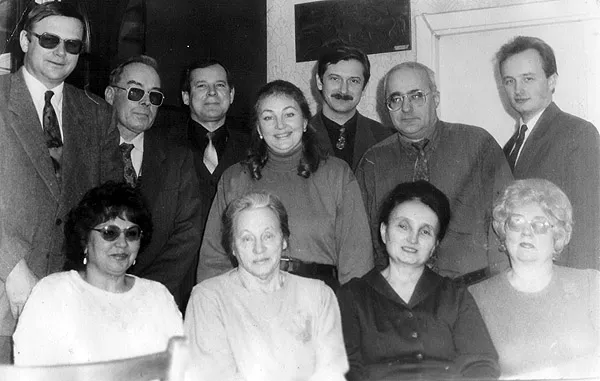
Since 1989, the department was headed by Professor F.M. Gaiduk. Author of over 160 scientific papers, including co-author of textbooks, 3 reference books and 4 encyclopedias. He acted as chief child psychiatrist of the Ministry of Health, was vice-rector of the Minsk State Medical Institute, deputy of the Moscow District Council of Minsk (1983-1985), chairman of the Republican Scientific Society of Psychiatrists and Narcologists (1991-1992), secretary of the party committee of the Medical Institute, for 10 years he headed Council for the defense of candidate and doctoral dissertations. Corresponding member of the Belarusian Academy of Education. For his multifaceted activity, F.M. Gaiduk was awarded a medal, a badge «Excellence in Health Care», he was awarded the title «Honored Worker of Health Care of the Republic of Belarus.»
Since 1999 Until 2004, the department was headed by Professor E.I. Skugarevskaya, who proved herself as an experienced clinician and scientist, a capable organizer and teacher, who went through all stages of practical, scientific and pedagogical work.
Professor E.I. Skugarevskaya is the author of the monography «Emotions and Alcoholism», more than 170 scientific works. She served as Deputy Dean of the Faculty of General Medicine for scientific work, for many years she was the scientific secretary, and now she is the chairman of the Council for the Defense of Candidate and Doctoral Theses.
Professor E.I. Skugarevsaya from 1995 to 2005 - a member of the Expert Council of the Supreme Attestation Committee of the Republic of Belarus; Chairman of the Protective Doctoral Council at the Belarusian State Medical University with a degree in psychiatry; member of the Expert Council of the Committee on Religious and Ethnic Affairs under the Council of Ministers of the Republic of Belarus; member of the Belarusian Helsinki Human Rights Committee.
Since 2004, the department is headed by Doctor of Medical Sciences, Professor O.A. Skugarevsky. His Ph.D. thesis is devoted to the study of functional psychoses of involutional age in women. Scientific research in the context of a doctoral dissertation was devoted to the actual problem of eating disorders. Author of over 120 scientific papers.
By order of the Ministry of Health of the Republic of Belarus dated February 4, 2009 No. 76, the state institution «Republican Clinical Psychiatric Hospital» was renamed into the state institution «Republican Research and Practice Center of Mental Health», which is currently the main clinical base of the department. In addition, teaching is carried out on the basis of the Municipal Clinical Children's Psychoneurological Dispansary.