
Students of all courses of medical, pediatric, dental, military medical, preventive medicine, pharmaceutical faculties, and the medical faculty of foreign students are trained at the Department of Psychiatry and Medical Psychology of the Belarusian State Medical University. Training is carried out at the clinical bases of the State Institution «Republican Scientific and Practical Center for Mental Health» and the Healthcare Institution «City Clinical Children's Psychoneurological Dispensary».
The following disciplines are taught at the department:
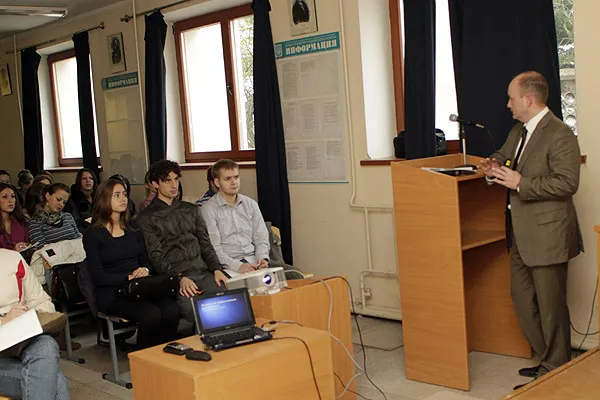
Fundamentals of Pedagogics and Psychology
This academic discipline implements close interdisciplinary ties with the academic discipline «Philosophy», at the same time is focused on the professional training of the future doctor.
It aims at the formation and development of social and personal competencies based on humanitarian knowledge, emotional-value and social-creative experience and ensures the solution and implementation of civic, social and professional, personal tasks and functions.
Studies the essence, regularity and principles of a person's mental life in an ontogenetic context and taking into account gender differences, the structure of clinical interviewing, psychological perception and assessment of events in the surrounding world. Gives basic ideas about personality psychology, about the process of personality formation during training, development and upbringing.
Describes the essence of the processes of self-actualization and self-realization, personal realization in the system of interpersonal and social relations.
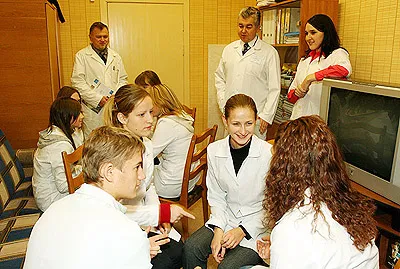
Medical psychology
This academic discipline contains:
- systematized scientific knowledge about the role of psychological and social factors in the development of human diseases.
- concepts of etiology, pathogenesis, specific prevention, therapy and correction of pathological conditions caused by the individual's response to illness and breakdown of psychological defense mechanisms.
- includes the latest scientific data on the role of psychological factors in the formation of social maladjustment.
The purpose of teaching and studying this discipline is to train a doctor who has modern medical knowledge in the field of psychology of a sick person, correction and prevention of psychological problems in clinical practice.
Psychiatry and narcology
This academic discipline includes theoretical and applied issues of diagnosis, treatment, prevention and social rehabilitation of persons suffering from mental and behavioral disorders, new scientific data on taxonomy, etiology, pathogenesis, early diagnosis and treatment, as well as epidemiological data on the prevalence of mental and behavioral disorders. disorders. A feature of the discipline is its applied character for the purpose of practical application in clinical practice of a primary care physician.
Psychiatry, psychohygiene and narcology is an educational discipline that includes theoretical and applied issues of prevention, psychohygiene, diagnosis, correction and social rehabilitation of persons suffering from mental and behavioral disorders. The discipline is part of the training of a doctor. The goal is to form the skills of psychohygiene and psychoprophylaxis of mental and behavioral disorders.
Elective courses:
Narcology
The growing prevalence of the use of psychoactive substances in the population, accompanied by serious economic and social damage, is a matter of serious concern to both the public and the state. The Republic of Belarus has developed and is implementing the State Program of National Actions to Prevent and Overcome Drunkenness and Alcoholism, according to which it is envisaged to expand the volume of training students of medical educational institutions on drug addiction issues, develop programs for teaching general and private drug addiction with an emphasis on early diagnosis, treatment and prevention of addictions. psychoactive substances.
In connection with the scale of the tasks set, ideas about the role of the primary care physician in the recognition, therapy and prevention of disorders caused by the use of psychoactive substances are changing. The purpose of teaching the discipline is to provide doctors of all specialties with the necessary amount of knowledge in the diagnosis, treatment and prevention of addiction to psychoactive substances.
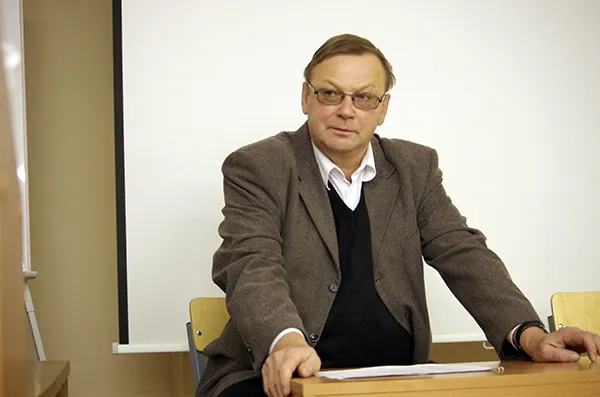
Basics of psychotherapy
When considering the conditions, causes of occurrence, dynamics of development, strategies of therapeutic action and rehabilitation measures for various kinds of painful disorders, it is advisable to take into account, along with biological factors, socio-psychological phenomena unfolding in the field 'organism - environment'. The latter, taking into account their diversity and dynamism, can either contribute to the recovery and readaptation of the individual to the social conditions surrounding him, or, conversely, maintain a 'painful beginning' in him, leading to the chronicization of the pathological process and possible professional and social disability.
It is no coincidence that in the structure of requirements for the medical competence of a doctor in the world there is knowledge of the possibilities of psychotherapeutic correction of painful conditions.
Teaching the discipline is focused on the formation of skills of psychotherapeutic correction of states within the framework of medical and psychological models of psychotherapy.
Fundamentals of psychosomatic medicine
Psychosomatic medicine is the science of the relationship between mental and somatic processes. The ability of a doctor to see the personality of a suffering person behind individual signs of a painful disorder and to treat «not a disease, but a patient» defines the standard of the pinnacle of medical education. As one of the tenets of the humanity of the medical specialty, this principle formed the basis of the modern biopsychosocial approach in medicine.Thus, the goal of teaching the discipline is determined by the need to form a holistic worldview in the future clinician based on a biopsychosocial approach, mastering the knowledge and skills of early recognition, the main methods of treatment and prevention of psychosomatic disorders.
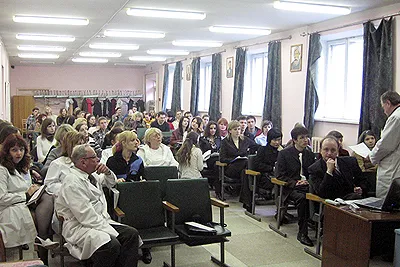
Conflictology
The task of the discipline is to study the patterns of the formation of conflicts, to prevent and resolve them in practice. The study of conflicts presupposes knowledge of the theory of conflict.
Prevention of conflicts is work with not yet begun, but possible conflicts. The settlement of a conflict or its management is the prevention of aggressive actions, the achievement of agreements, the implementation of which is more beneficial to the parties than the continuation of conflict interaction. Thus, the purpose of teaching the discipline is to develop doctors' skills in preventing or managing conflict situations in a professional environment.
Also, clinical residents, undergraduates, postgraduates and doctoral students of full-time and part-time forms of study, including foreign students, are trained at the department. The staff of the department has developed and approved educational and work programs in the above disciplines for students of all faculties, clinical residents, undergraduates, graduate students.
During the year, the department conducts postgraduate training for up to 45 interns in the specialty «Psychiatry-Narcology».
In accordance with the content of the curriculum, entrance and final examination questions for the specialty have been developed. Within the framework of the innovative project «Computer Testing at BSMU», tests of various levels of complexity have been developed in the disciplines «Fundamentals of Pedagogy and Psychology», «Medical Psychology» and «Psychiatry and Narcology».
In educational and methodological activities, the department relies on both traditional teaching methods in the form of lectures and practical exercises, and innovative ones using modern educational and information technologies. In the process of lecturing and conducting practical exercises, computer presentations are actively used.
During practical classes, trainings are conducted with the involvement of students, who are invited to play the role of both a doctor and a patient with any mental pathology, as well as supervise the work of their colleagues; participation of senior students in conducting weekly clinical analyzes both with the direct participation of patients and the presentation of clinical cases through video presentations has become mandatory at the department.
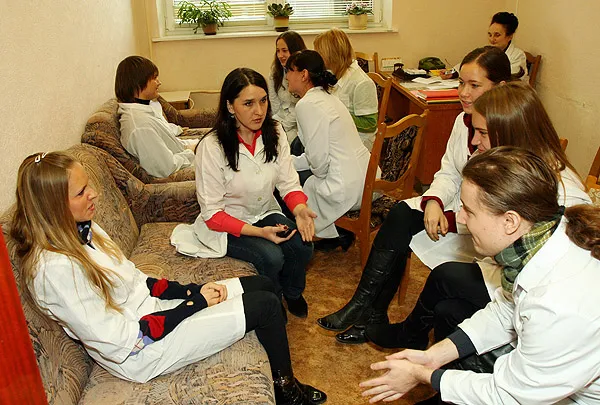
Several dozen educational interviews with patients with various mental pathologies were filmed at the department, these materials are widely used in the educational process.
In order to optimize the educational process in accordance with the approved work program, the department has developed guidelines on various aspects of the topics studied for teachers and students, as well as “Guidelines for the supervision of patients.
In 2006, the publishing house 'Vysheyshaya shkola' edited by Skugarevskaya E.I. the textbook «Clinical Psychiatry. Childhood».
Knowledge control is carried out both in the form of oral and written surveys of students, and in the form of computer testing, listening to reports and presentations, control of practical skills in conducting a diagnostic interview, writing an educational case history.
Students are actively involved in research activities, over 20 reports on various psychiatric issues are presented by BSMU students at the annual student scientific conference.
Every year, students' work is awarded with diplomas of 1, 2 and 3 degrees at the Republican review-competition of student scientific works.